Industry Insights by The Experts
Industry Intelligence from the Disruptors Redefining Private Label Manufacturing
Clean-Label Supplement Formulation: The Tradeoffs Brands Need to Understand
Industry: Creators, Scaling Operators, Multi-Location, Medical Groups
A Cleaner Label Can Create a More Complicated Product
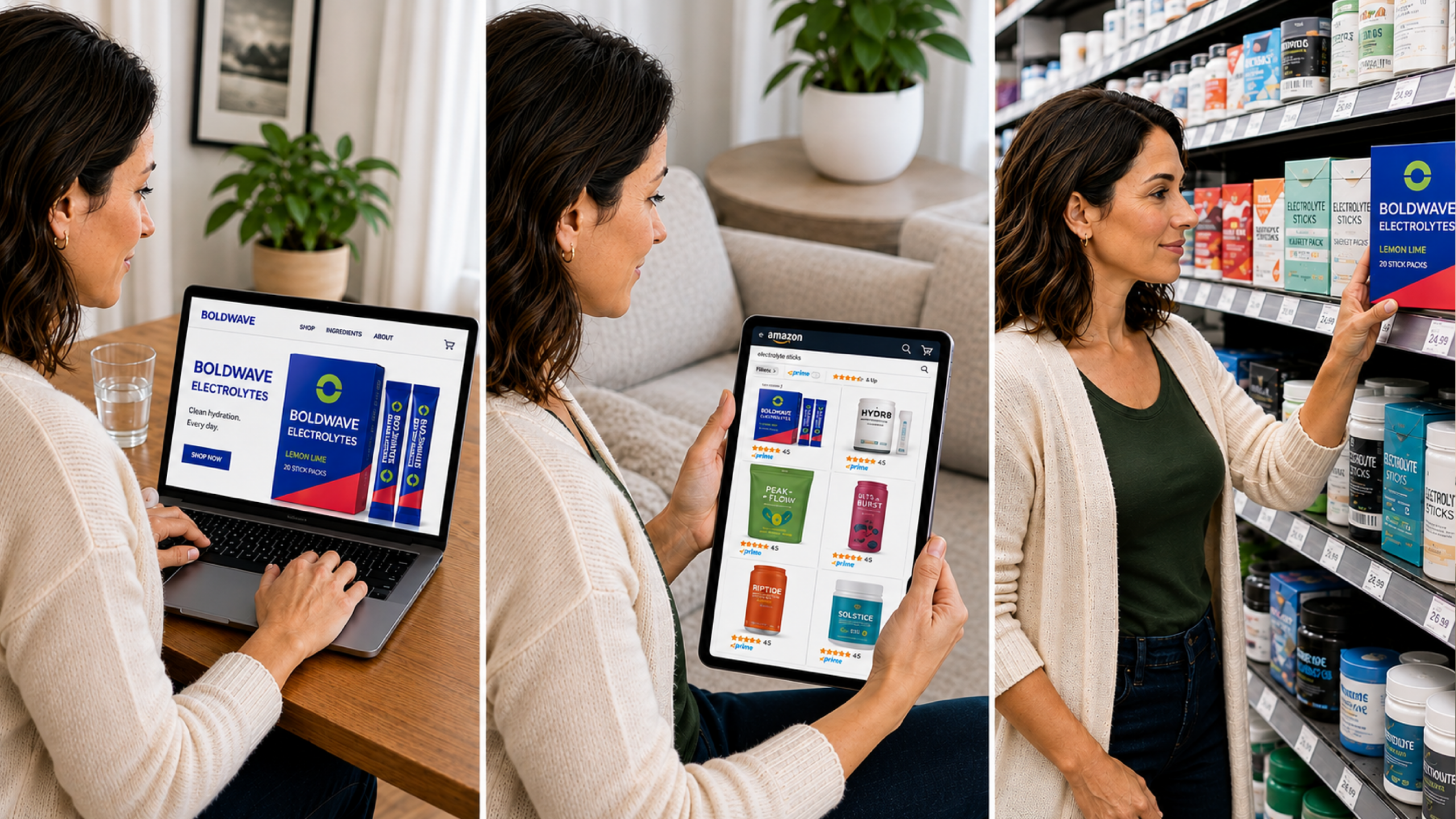
Supplement shoppers have more ways to evaluate an ingredient list than ever before. They can search an unfamiliar name while standing in a store, compare formulas online, or use an app that flags ingredients according to its own standards. A decision that once depended largely on the package now may be influenced by information from retailers, reviewers, social media, and third-party tools.
NIQ’s 2026 health and wellness analysis found that one in four surveyed consumers was using third-party label-scanning apps. Among those surveyed, 87% said they would return a product to the shelf if an app identified an ingredient as poor or undesirable. Whether those assessments account for an ingredient’s function or the amount used, they can still affect how a product is perceived.
Chris Costagli, Vice President and Food & Beverage Insights Lead at NIQ, described the shift:
“Trust has moved beyond labels because misleading claims, diversions, and greenwashing have been detrimental. Technology increasingly arbitrates what makes it into the basket.”
This scrutiny gives supplement brands a clear reason to consider cleaner, shorter, or more familiar ingredient lists. The difficulty begins when that consumer preference reaches the formula. An ingredient that looks unnecessary on a label may help a powder flow through filling equipment, hold a tablet together, preserve flavor, control moisture, or preserve the product’s appearance over its shelf life.
Removing or replacing that ingredient can affect far more than the words printed on the package. The change may alter taste, texture, mixability, stability, serving size, production speed, packaging requirements, or cost. An alternative that performs well in a powder may create problems in a capsule or gummy. A formula that succeeds in a small trial may behave differently when it moves through commercial equipment.
Successful clean-label supplement formulation begins with a clear consumer promise and follows each proposed change through the entire product. Brands need to understand what an ingredient does, which alternatives are realistic, and what each choice will require in production and daily use. Before making those decisions, the brand must first define what clean label is supposed to mean for the product it is developing.
Define the Promise Before Changing the Formula
Clean label can describe several different product choices. Consumers may associate the phrase with:
- Fewer ingredients or names they recognize
- Natural flavors, colors, or sweeteners
- Plant-based or non-GMO ingredients
- Allergen-related exclusions
- Vegetarian or vegan delivery systems
- Organic certification
- Greater transparency around sourcing and processing
The supplement industry has no single, universally recognized definition of clean label. As Nutritional Outlook has explained, the concept can extend across active ingredients, excipients, delivery systems, sourcing, and supply-chain practices. Each brand needs to decide which qualities matter most to its intended customer before the formulation team begins removing or replacing ingredients.
For a capsule product, the essential requirements might include a vegetarian shell, no artificial colors, and compliance with a specific allergen policy. A short “Other Ingredients” list may be preferred, but the product must also maintain consistent fill weights and a practical capsule count. A flavored powder may place greater importance on natural flavors, recognizable sweeteners, and an enjoyable taste. It could require more supporting ingredients than the capsule while still delivering the clean-label promise its customer expects.
These priorities should remain separate from assumptions about safety or quality. An ingredient’s suitability depends on its identity, specifications, amount, purpose, and use within the complete formula. Familiarity alone does not establish those qualities.
When an unfamiliar ingredient performs an important function, the brand can also explain why it is present. Clear information on the product page, FAQs, or other educational materials may give consumers more useful context than a substitution that weakens the finished product.
A useful development brief identifies which requirements are essential, which are preferences, and where the brand has flexibility. It should also account for certification standards, retailer policies, target markets, and planned claims. Once that promise is clear, the formulation team can evaluate each ingredient against it. The first question is what role the ingredient plays in the product.
Understand the Function Before Removing an Ingredient
The “Other Ingredients” list often receives the most attention during a clean-label review. These ingredients may occupy little space in the formula, but they can have a substantial effect on how the product is made and how it performs.
The FDA’s ingredient-labeling guide for dietary supplements includes binders, colors, excipients, fillers, flavors, and sweeteners within its definition of ingredients. Depending on the product, these materials may help:
- Move a powder consistently through filling equipment
- Hold a tablet together or support proper disintegration
- Distribute a small amount of an active ingredient evenly
- Control moisture, clumping, texture, color, or taste
- Make the intended serving practical to manufacture and consume
Consider a capsule containing several powdered botanical extracts. The blend may look acceptable in a small development sample but flow unevenly on commercial equipment because the ingredients have different particle sizes, densities, or moisture levels. That behavior can affect filling speed, capsule weight, and the number of units that fail an in-process check.
A flow agent may help control the problem. If the brand wants to remove or replace it, the alternative must be evaluated within the complete blend. It may require a higher use level, occupy more capsule space, or behave differently as production volume increases. The formula may also need a different capsule size or another adjustment to the manufacturing process.
The same reasoning applies to ingredients used for flavor, color, texture, stability, and preservation. Their function must be accounted for before they are removed. A successful substitution preserves the qualities the finished product depends on or gives the brand a clear understanding of the tradeoff it is accepting.

Dosage Form Determines What the Formula Needs
The dosage form sets practical limits on a clean-label formula. Capsules, tablets, powders, gummies, and liquids expose a formula to different production conditions and create different expectations for the consumer. An ingredient that serves little purpose in one format may be important in another.
Capsules and Tablets
Capsules and tablets must deliver a consistent amount in a limited space. A formula with a large active serving may leave little room for ingredients that support powder flow, compression, or disintegration. Removing those materials can require a larger capsule, more capsules per serving, or changes to the production process. Capsule-shell materials, coatings, and colors also become part of the clean-label decision.
Powders
Powders provide more room for active ingredients, while making taste and preparation a larger part of the consumer experience. Botanical extracts, amino acids, minerals, and other actives may contribute bitterness, odor, grittiness, or poor solubility. Natural flavors and sweeteners can improve the experience, while anti-caking or flow ingredients may help the powder remain easy to scoop and mix. An unflavored product may support a shorter ingredient list, but it also asks the consumer to tolerate or disguise the natural taste.
Gummies and Liquids
Gummies and liquids create additional demands involving texture, moisture, flavor, color, preservation, and shelf stability. Replacing an artificial color with a naturally sourced alternative may affect shade consistency or sensitivity to light and heat. Reducing preservatives may require changes to acidity, packaging, processing, or shelf life. A gummy also has limited capacity for active ingredients, so the desired dose can increase the serving count or make the format impractical.
These differences can change the best path for the product. A brand committed to a substantial serving and a very short ingredient list may find that a powder supports the promise more naturally than a gummy. Another brand may accept several supporting ingredients because convenience and taste are central to the intended experience.
Evaluating the dosage form and ingredient standards together helps the team select a format that supports both the clean-label promise and the intended consumer experience.
One Ingredient Change Can Reshape the Product
A substitution that looks simple on an ingredient list can affect the rest of development. The new material may react differently to heat, moisture, light, acidity, or other ingredients, leading to changes in the supplier, production process, test method, or package.
Consider a gummy brand replacing a synthetic color with a color derived from fruits or vegetables. The alternative may produce the desired shade in an early sample, but commercial processing and shelf-life testing can reveal additional requirements:
- Processing: Heat and acidity may change the color during cooking, requiring adjustments to the formula or the point at which the color is added.
- Stability: The shade may change over time or respond differently to light, creating a need for further stability work.
- Flavor: A higher use level may contribute its own taste, which can require changes to the flavor system.
- Packaging: Greater sensitivity to light or oxygen may influence the container, barrier protection, or storage instructions.
- Supply and cost: The alternative may have different pricing, lead times, minimum orders, or availability at commercial volume.
By the time the product reaches an acceptable result, the original color substitution may have changed the development timeline, ingredient cost, testing plan, packaging, and shelf-life expectations. The brand then has to decide whether the added work and cost still support the product.
Similar chains appear in other formats. Removing an anti-caking ingredient can change how a powder stores and scoops. Reducing a flavor system can make the active ingredients more noticeable with every serving. These effects may be manageable, but they should be discovered during development rather than after inventory has been produced.
Cost is rarely limited to the price difference between two ingredients. Additional samples, longer development, slower production, specialized packaging, shorter shelf life, or higher product losses can all change the final economics. Ingredient availability also becomes important as the brand grows. An alternative that works for an initial order still needs the documentation, supply, and consistency required for future production.
These consequences belong in the development brief alongside the label requirements. They help the brand determine whether the substitution is practical or whether the formula, format, or product expectations need to change.
Set Priorities Before Formulation Begins
A clean-label brief made only of exclusions leaves the development team without direction when requirements conflict. The formulator may know which ingredients the brand wants to avoid, but still need guidance on serving size, taste, shelf life, cost, and dosage format.
The brief should give the team a clear hierarchy. Five questions can establish it:
- What should clean label mean to this customer? Identify the qualities the brand wants the consumer to recognize, such as a short ingredient list, natural flavors, a vegan delivery system, or transparent sourcing.
- Which requirements are firm? Separate required certifications, retailer standards, allergen restrictions, and label claims from general preferences.
- What must the product deliver? Establish the intended dose, serving count, sensory experience, shelf life, package, and target cost.
- Where does the brand have flexibility? Decide whether the team can adjust the format, flavor, appearance, capsule count, packaging, or other product details when a requirement creates a conflict.
- How will the final choice be evaluated? Determine which prototypes, production trials, stability work, specifications, and finished-product tests will support the decision.
When requirements conflict, this hierarchy gives the team a basis for choosing what can change. The brand may preserve an essential certification or ingredient exclusion while adjusting the format, appearance, serving count, or another product preference.
“Clean-label development often slows down when a tradeoff appears and no one knows which priority should win. The brand should decide who can make that call early, before another sample or packaging change adds unnecessary time and cost.” — Steven Anderson, Founder and CEO of Next Day Nutra
Those choices are easier to make while the formula and format are still flexible. The formulator and manufacturer can assess ingredient availability, material behavior, equipment requirements, testing, and likely production costs before the brand commits to packaging or a launch timeline. Suppliers and certifiers may also need to confirm that proposed ingredients satisfy the intended sourcing or certification standards.
A clear brief does not eliminate clean-label tradeoffs. It gives the team a consistent way to evaluate them. The final formula should satisfy the chosen label standards while remaining practical to manufacture, appropriately priced for its market, and straightforward to use.
Choose the Tradeoffs Before the Formula Is Final
Clean-label positioning is strongest when the brand can explain its ingredient standards and support them with a product that tastes as intended, remains stable through its shelf life, and can be manufactured consistently. Evaluating the consequences before the formula is final gives the team room to make deliberate tradeoffs.
Next Day Nutra helps supplement brands compare ingredient alternatives against the intended dosage form, testing requirements, packaging, and commercial production process. Bringing those questions into development early can reveal practical constraints before the formula and package are locked.
The right time to understand the tradeoffs is before the label promise becomes a production requirement.
Industries
Recent Posts