Industry Insights by The Experts
Industry Intelligence from the Disruptors Redefining Private Label Manufacturing
What Happens After Launch: How Supplement Brands Should Handle Complaints and Adverse Events
Industry: Creators, Scaling Operators, Multi-Location, Medical Groups
After Launch, Customer Feedback Becomes Quality Information
Before launch, a supplement brand evaluates quality through ingredient documentation, production records, finished-product testing, packaging reviews, and other planned controls. Once the product reaches customers, the brand begins receiving a different kind of information. Consumers report what the product looked like, how it arrived, how they used it, and what happened afterward.
Some messages involve a routine order or return. Others mention an unusual odor, broken seal, unexpected reaction, or medical treatment. These reports rarely arrive in formal quality or regulatory language. They may appear in a refund request, product review, marketplace message, practitioner call, or any other channel where consumers contact the brand.
The person receiving that first message should not be expected to determine the cause or complete a technical investigation. The brand still needs a process that recognizes when the report contains a possible product-quality issue or health-related event and sends it to the appropriate reviewer. If that handoff happens too late, the consumer may discard the product, the lot number may never be collected, and important details about timing, use, or medical treatment may be lost.
Documenting a report allows the brand to preserve what the consumer experienced without drawing an early conclusion about the cause. The information can then be routed to the person responsible for quality or regulatory review.
A useful post-launch system distinguishes routine service issues from product complaints and adverse events, preserves the information needed for investigation, and identifies when regulatory reporting or follow-up may be required. That begins with recognizing that similar messages can require different responses.
Similar Messages Can Require Different Responses
Incoming messages need to be evaluated for what they contain. A refund request may mention an adverse event, while a product review can identify a packaging problem or another issue that needs quality review.
These reports generally fall into four categories:
- A customer-service issue involves the transaction or general experience, such as a billing question, delayed delivery, incorrect item, or preference-based return. It may be resolved by the support team unless the conversation reveals a possible quality or health concern.
- A product-quality complaint raises a question about the product, packaging, labeling, or another requirement related to manufacturing. Examples include an incorrect count, broken seal, unusual appearance, off-odor, damaged container, or suspected labeling error.
- An adverse event is an unwanted health-related experience that the reporter associates with using the supplement. The description may involve a minor symptom or a more significant outcome. Recording the event does not require the brand to conclude that the product caused it.
- A serious adverse event involves an outcome such as death, a life-threatening experience, inpatient hospitalization, a persistent or significant disability or incapacity, a congenital anomaly or birth defect, or a medical or surgical intervention needed to prevent one of those outcomes.
These categories can overlap. A report about a broken seal and an unexpected reaction may require both a product-quality investigation and an adverse-event assessment. An unusual taste with no reported symptoms may follow only the quality path, while a health-related experience can be an adverse event even when the product appears normal.
Product-quality complaints move into the review and investigation process required under 21 CFR Part 111, Subpart O. Adverse events follow a separate assessment process. FDA guidance on dietary supplement adverse-event reporting explains which events meet the serious threshold and when a report must be submitted. These decisions should be assigned to qualified reviewers rather than the employee who receives the original message.
The brand can only make those distinctions when the first report contains enough useful information. That makes the initial conversation with the consumer an important part of both the customer experience and the review that follows.
The First Response Must Support the Consumer and Preserve the Facts
A consumer who reports a problem may be worried, frustrated, or uncertain about what happened. The first response should acknowledge the concern and make the next step clear. It should also preserve the details that quality or regulatory personnel will need to evaluate the report.
That does not require a customer-service representative to diagnose a reaction or decide whether the supplement caused it. The representative should avoid debating the consumer’s account, suggesting a medical explanation, or promising a particular investigation result. If the consumer describes an immediate medical emergency, the team should follow an approved response that directs the person to seek appropriate emergency care.
The consumer’s description should be recorded as accurately as possible, including the words the consumer used. From there, the intake process should collect the available details about the person, product, and event:
- Product name, dosage format, serving used, lot number, and expiration date
- Purchase channel and purchase date
- How the product was used and when use began
- What happened, when it began, and whether use stopped
- Whether medical attention or hospitalization occurred
- Other supplements or medications reported by the consumer
- Contact information for the consumer and initial reporter
- Photographs, packaging, or remaining product that may support the review
Not every consumer will have every answer. The product may have been discarded, the lot number may be unreadable, or the reporter may decline to provide personal information. The record should show what was provided, what was unknown, and what the consumer declined to answer. Staff should not complete missing fields with assumptions.
Specific product identification becomes especially important when a brand sells several formulas, flavors, serving sizes, or package versions. The FDA has explained that missing information about the product, event, consumer, or medical circumstances can make a report difficult to evaluate. A lot number, expiration date, label image, and order history can help connect the report to the correct production records.
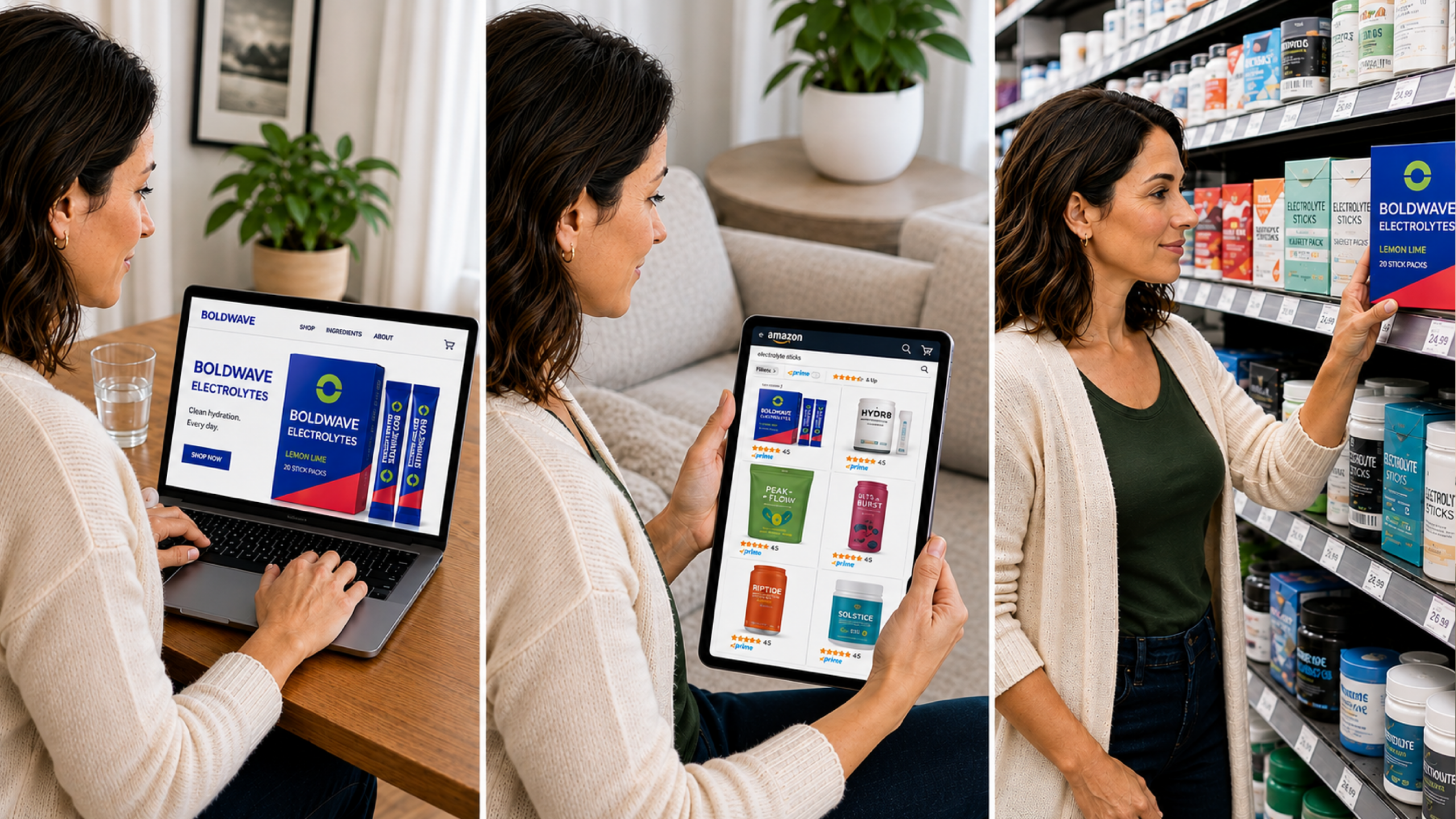
The process also needs to account for every channel where consumers can speak. A direct email may reach customer support, while an Amazon message may stay with the marketplace team and a social-media comment may be handled by marketing. Retailers, practitioners, and fulfillment partners may receive reports of their own. Each team needs to know which messages must be documented and where to send them.
“Complaint data only becomes useful when every channel feeds the same record. A brand cannot identify a pattern when customer service, marketplaces, retailers, and fulfillment partners are each holding a different part of the story.” — Steven Anderson, Founder and CEO of Next Day Nutra
A clear handoff includes the original report, the date it was received, the information collected, and any communication already sent to the consumer. That gives the designated reviewer a reliable starting point and documents when the brand received the report.

Serious Adverse Events Need Immediate Escalation
A report involving hospitalization, a life-threatening experience, death, or another potentially serious outcome should not remain in a general customer-service queue. It needs to reach the person responsible for assessing adverse events as soon as it is recognized.
Under FDA guidance, the manufacturer, packer, or distributor whose name appears on the product label is generally the “responsible person” required to submit serious adverse event reports. For many custom-manufactured products, that may be the brand or distributor named on the label rather than the contract manufacturer that produced the supplement.
A contract manufacturer may support the investigation, but that work does not automatically transfer reporting responsibility. If another party will receive or submit reports, the agreement should define how information will be forwarded and who will act on it.
Serious adverse event reports received through the domestic address or phone number on the product label must be submitted to the FDA within 15 business days after receipt by the responsible person. The FDA recommends using the same timeline for reports received through other channels, including email. Once the five minimum elements are known, the reporting period begins. Those elements identify the affected person, initial reporter, responsible company, suspect supplement, and serious outcome.
That timeline is one reason the regulatory assessment and product investigation need to move in parallel. The brand should collect missing information diligently, but it should not delay a report while waiting to determine the cause or complete every quality review. Reports can be submitted electronically through the FDA Safety Reporting Portal or on the required paper MedWatch Form 3500A, along with a copy of the relevant product label.
Reporting duties can continue after the initial submission. New medical information received within one year of the initial report must be submitted within 15 business days of receipt. Records related to serious and non-serious adverse events must be retained for six years.
Because reporting responsibility can depend on the company named on the label and the agreements among the parties, the procedure should be reviewed by qualified regulatory or legal counsel before it is needed. While the adverse event is being assessed, the quality team can investigate whether the report points to a problem with the product or batch.
The Investigation Follows the Report Back to the Product
Responding to the consumer and investigating the product are related parts of the same process, but they answer different questions. Customer support may issue a refund, replace an order, or explain what will happen next. The quality review determines whether the report suggests a possible failure involving the product, packaging, labeling, or manufacturing process.
A refund does not close that second question. If the complaint suggests that the supplement may have failed to meet a specification or another manufacturing requirement, a qualified person must review it and determine whether an investigation is required. Quality-control personnel must review that decision, along with the findings and any follow-up action.
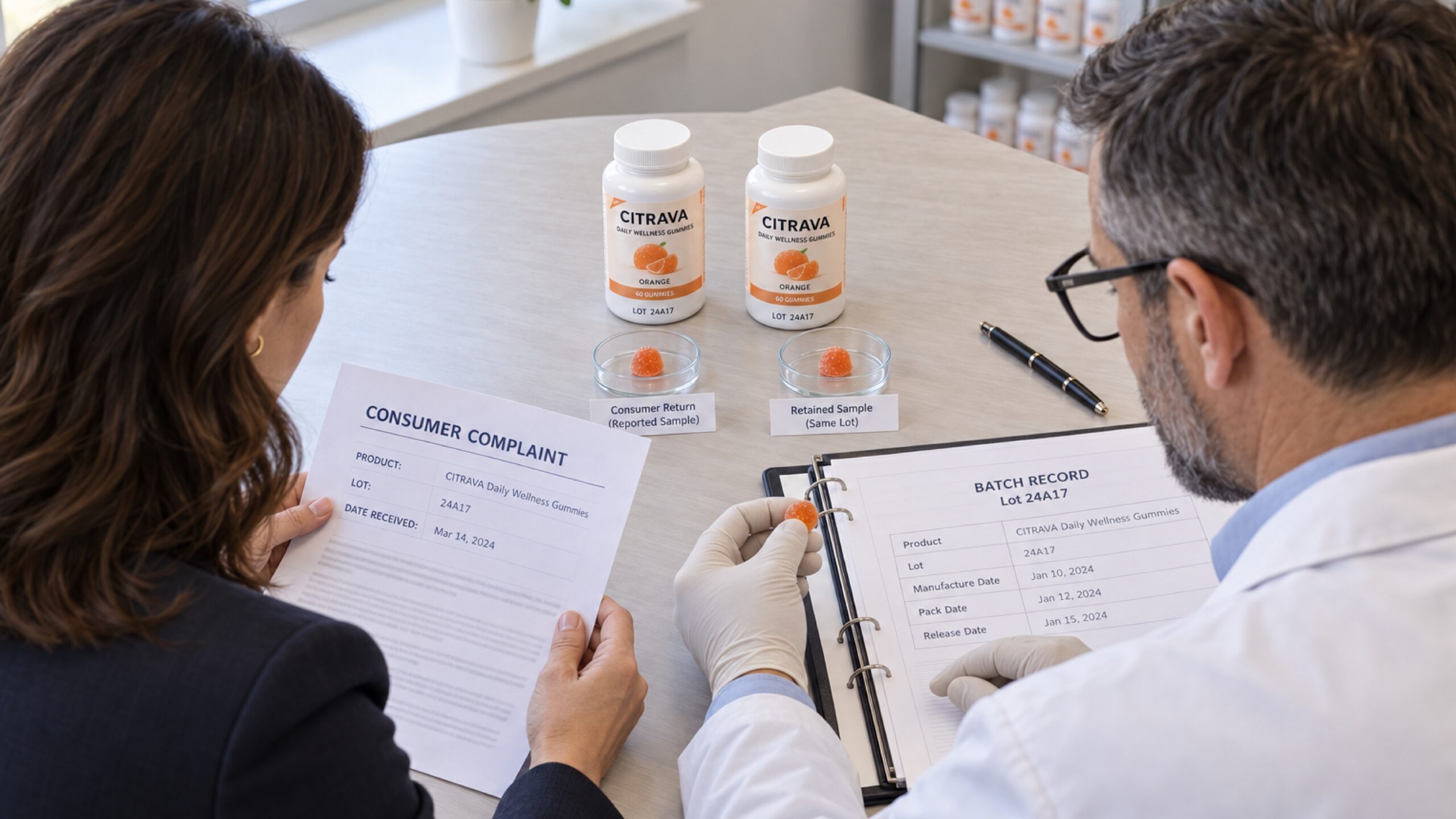
The details collected during intake help connect the report to the correct product and production records. A lot number provides the clearest connection, while the expiration date, package size, flavor, label version, order history, retailer, and purchase date may narrow the possibilities when it is unavailable.
Once the relevant lot or production window is identified, the brand and manufacturer can compare the complaint with the records behind the product. That review may include the batch and packaging records, ingredient lots, supplier documentation, finished-product testing, production deviations, label approvals, and shipping or storage information. Retained samples or returned product may also be examined when they are available and relevant to the concern.
The scope should follow the issue rather than stop with the bottle involved in the complaint. If the reported problem could affect more than one unit, the review may need to include related batches, shared ingredient lots, packaging components, or production runs. Complaint history can also show whether the same issue has been reported elsewhere.
The contract manufacturer plays an important role because many of the records and samples needed for the investigation originate at the manufacturing facility. The brand should provide the complete consumer report, photographs, product details, and any returned material it receives. The manufacturer can then review the production history and explain whether anything unusual occurred during manufacturing, testing, packaging, or release.
The available evidence may support several conclusions. The product may have met its specifications and show no sign of a manufacturing problem. The issue may relate to shipping damage, storage after purchase, or incorrect use. The review may also identify a deviation, packaging failure, ingredient concern, or another condition that requires corrective action.
Whatever the outcome, the record should explain what was reviewed, what the investigation found, what follow-up occurred, and how the consumer was answered. A clear record allows the brand to close the individual case while preserving information that may become more meaningful when compared with future reports.
Patterns Determine Whether the Response Goes Further
An individual complaint may be reviewed, resolved, and closed without identifying a product failure. The information still has value. When reports are recorded consistently, the brand can compare them across products, lots, sales channels, and time periods.
That comparison may reveal a pattern that was not visible in the first case. Several reports involving the same lot may point toward a production or packaging issue. Similar complaints across multiple lots may lead the team to examine a shared ingredient, supplier, package component, storage condition, or product instruction. Reports concentrated in one sales channel may raise questions about fulfillment or handling after the product left the manufacturer.
Megan Olsen of the Council for Responsible Nutrition makes the broader point in SupplySide Supplement Journal:
“Companies should treat dietary supplement complaints as an important element when reviewing the totality of safety evidence”
That requires more than counting the number of complaints. A high-volume product may naturally generate more contacts than a product with limited sales. The type, seriousness, timing, and similarity of the reports provide necessary context. One report involving a serious outcome may require immediate attention, while several lower-severity complaints may become important because they describe the same condition.
Useful trend review depends on consistent records. If one team describes an issue as a return, another records it as damaged inventory, and a third leaves it inside a marketplace message, the connection may be difficult to see. Shared categories and a central record allow the brand to compare similar reports without losing the consumer’s original description.
A pattern provides a reason for further investigation without establishing that the product caused an event or failed a specification. The next step may involve expanding the investigation to additional lots, testing retained samples, reviewing a supplier or packaging component, placing inventory on hold, or assessing whether corrective action is needed.
Some findings may lead to changes in the product or process. The manufacturer may adjust a production control, the brand may revise packaging or storage instructions, or the parties may increase testing for future batches. Findings that suggest a broader quality or safety risk may require consultation with regulatory or legal professionals to assess market withdrawal, recall, or other action.
Post-Launch Readiness Should Be Built Before Launch
When a complaint arrives, the brand will either follow a prepared process or try to create one while the case is already moving. The consumer is waiting for a response, information may disappear with time, and a reporting deadline may already be approaching.
Before launch, the brand should assign ownership for intake, quality review, adverse-event assessment, consumer communication, and regulatory reporting. Teams that interact with consumers need to recognize what should be escalated, and reports from every sales and support channel need to reach the same process.
The manufacturing agreement should define how quickly batch records, testing information, retained samples, and investigation findings can be exchanged. With those responsibilities established, the team can act before important information is lost or a reporting deadline is missed.
Next Day Nutra helps supplement brands maintain clear production records, lot traceability, testing documentation, and direct manufacturing communication when a post-launch concern requires review. Discussing those needs before production gives the brand a clearer understanding of how an investigation would work if a problem is reported later.
A launch plan is incomplete until the brand knows what will happen when the first complaint arrives.
Industries
Recent Posts