BEHIND THE CURTAIN
The Ultimate Founder’s Guide to the Real
Costs of Launching Supplements
Introduction
Launching a supplement product is one of the highest-ROI moves a wellness brand can make — but also one of the most misunderstood.
Too many founders focus on the logo, the marketing, or the idea… and skip the financial mechanics that determine whether a product becomes a winner or a liability.
At Next Day Nutra, we work with hundreds of founders, operators, and creators who are building everything from hero SKUs to full product ecosystems. The difference between brands that scale fast and brands that stall early almost always comes down to financial clarity.
This guide gives you a zero-fluff breakdown of the real costs behind launching a supplement — including formulation, manufacturing, packaging, compliance, fulfillment, marketing, and cash flow planning.
- What will my first production run realistically cost?
- What does it take to break even?
- How do other founders model their cash flow?
- What budget do I actually need to launch successfully?
- What mistakes kill early-stage brands — and how do I avoid them?
Use this guide to think like an operator, not a hobbyist.
And if you want help evaluating your numbers, you can schedule a complimentary Production Planning Call with NDN’s Strategy Team at the end.
01 Core Cost Categories Every Founder Must Plan For
When founders think about launching a supplement, they usually think in terms of the product: the ingredients, the benefits, and maybe the packaging. In reality, a supplement launch is a chain of operational decisions, and each decision carries a cost.
Those costs fall into four core categories. Every successful launch accounts for all four. Most failed launches underestimate at least one.
Understanding these categories upfront helps you budget accurately, avoid surprises, and make smarter tradeoffs before you commit capital.
- Formulation & R&D
- Ingredient selection and compatibility
- Ingredient sourcing and quality tiers
- Standardization requirements (extract ratios, potency)
- Custom formulation development
- Lab samples and sensory testing
- Adjustments and iterations
- Stability considerations
- Flavoring (for powders or liquids)
- Encapsulation or tablet feasibility

Typical range: $1,500–$7,500 depending on complexity
At the low end, brands may choose a proven stock formulation that has already been tested and validated. This dramatically reduces cost and time to market. At the high end, founders pursue fully custom formulas with multiple actives, specialized extracts, or complex delivery formats, each of which adds cost, time, and risk.
A common mistake here is assuming that “more ingredients = better product.” In practice, overly complex formulas are more expensive to develop, harder to manufacture, and more difficult to support with compliant claims. Simpler, well-dosed formulas often perform better commercially and operationally.
- Manufacturing
Raw ingredients
Labor
Tamper evidence
Encapsulation or blending
Bottles, lids, seals, and desiccants
Minimum order quantities (MOQs)
Batch
testing
Microbial
testing
Stability testing (optional)
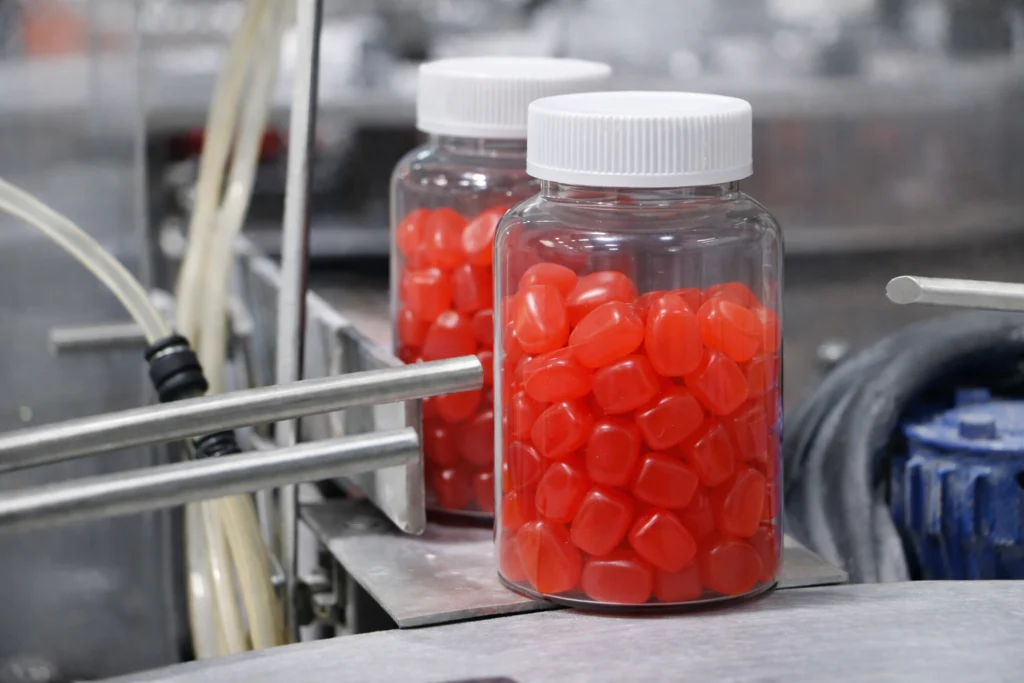
Several variables drive manufacturing
cost more than founders expect:
- Ingredient complexity and dosage levels
- Ingredient sourcing quality
- Product category (capsules, powders, probiotics, gummies, etc.)
- Bottle size and fill weight
- Testing and compliance requirements
Manufacturing is also where margin is either created or destroyed. Small changes (like capsule size, ingredient source, or batch size) can significantly impact unit cost. Founders often focus on “what it costs to make one bottle,” but experienced operators focus on how those costs change as volume increases.
This is why understanding manufacturing economics early is critical. It affects pricing, marketing flexibility, reorder timing, and long-term scalability.
- Packaging & Labeling
- Label design
- Regulatory compliance review
- Printing
- Color, finish, and adhesives
- QR code and Certificate of Analysis (COA) setup
- Brand story panels
- Cartons, shrink wrap, scoops, or inserts (if applicable)
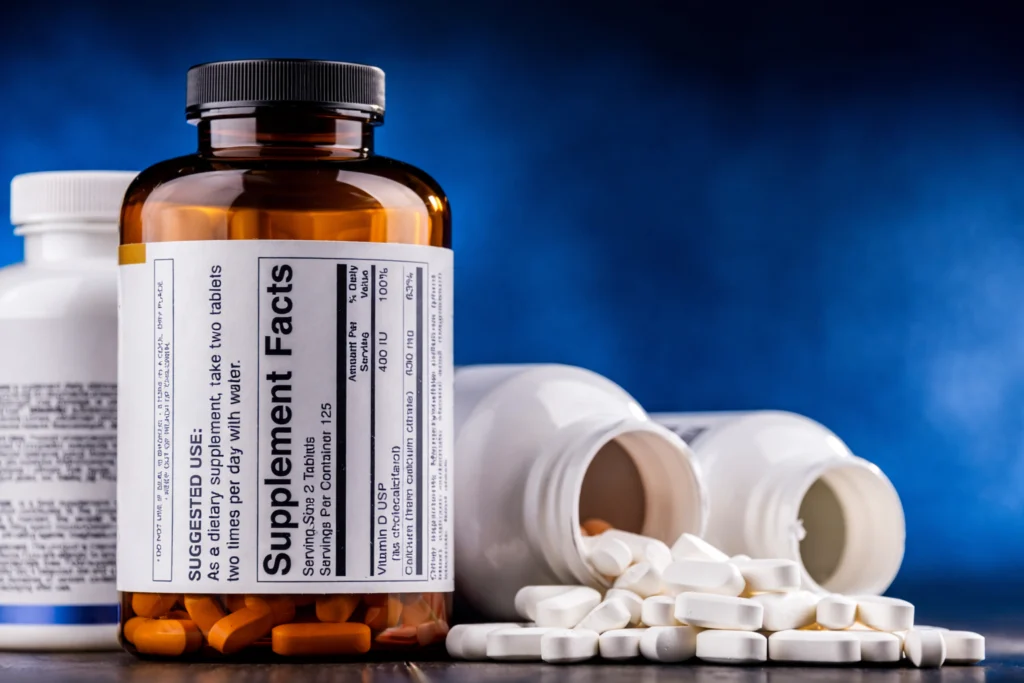
Errors in packaging are expensive. A misformatted Supplement Facts panel or an unsupported claim can require a full label reprint, delaying launch and adding unexpected costs. Because labels are regulated, revisions are not as simple as “changing copy.”
Smart founders treat packaging as an operational asset. They design labels that are compliant, scalable across SKUs, and flexible enough to support future line extensions without starting over.
- Fulfillment & Logistics
- Freight from the manufacturer to a warehouse
- Warehousing and storage
- Pick-and-pack operations
- Direct-to-consumer shipping
- Returns processing
- Inventory management
- Storage fees
- Amazon FBA/TikTok Shop Fulfillment prep (if applicable)

A strong product with weak logistics will struggle to scale. Late shipments, high storage fees, and inefficient fulfillment erode margins quickly and create poor customer experiences.
This is why NDN integrates manufacturing and fulfillment. Fewer handoffs mean fewer delays, fewer errors, and more predictable costs, all of which matter when you’re managing cash flow and planning reorders.
Why This Section Matters
These four cost categories form the foundation of every supplement launch. Missing or underestimating even one can create downstream problems that are difficult to fix after production starts.
Founders who understand these buckets early make better decisions about formulation, batch size, pricing, and timing. They launch with fewer surprises, and far more control.
02 Understanding Production Tiers
Your production tier is the single most important financial decision you will make when launching a supplement product. It influences how much cash you need upfront, what your unit cost looks like, how much margin you have to work with, and how quickly you can reorder once sales begin.
Most new founders pick a production size based on comfort or fear. Experienced operators pick it based on economics. The difference between those two approaches is often the difference between momentum and stagnation.
At a high level, your production tier directly affects:
- unit cost
- gross margin
- total capital required
- reorder timing
- cash flow predictability
Testing Tier
1,000 Units
- Highest cost per unit
- Limited ability to absorb marketing spend
- Margins are often thin or negative after fees
- Little room for error in pricing or promotions
- Local studios selling in-person
- Micro-creators with highly engaged but smaller audiences
- New operators testing demand before committing more capital
Entry Tier
2,500 Units
Lower unit cost
than 1,000 units
Still manageable from a cash perspective
Margins begin to support paid traffic and promotions
Enough inventory to test messaging and channels
- Growing wellness brands
- Creators with consistent traffic or email reach
- Studios with multiple locations or repeat customers
The Operator Sweet Spot
5,000 Units
- Strong margin profile
- Efficient unit cost
- Supports real sales velocity
- Predictable reorder cadence
This tier allows founders to think beyond testing and into optimization. Marketing becomes more efficient, pricing flexibility improves, and cash flow is easier to model.
- Established e-commerce brands
- High-performing creators with proven demand
- Franchise networks
- Brands preparing for retail or wholesale conversations
Scale Tier
10,000 to 25,000 Units
- Meaningful efficiency gains per unit
- Improved leverage in marketing and pricing
- Larger capital commitment
- Greater exposure if demand slows
- Brands with proven direct-to-consumer traction
- Wholesale-driven companies
- Amazon operators with stable rankings
- Celebrity or enterprise-backed brands
Why Production Tiers Matter
- customer acquisition
- agency or creative support
- wholesale pricing
- subscription discounts
- retail partnerships
- paid traffic of any kind
Production tiers determine margin → Margin determines marketing power → Marketing power determines growth.
Founders who understand this early make smarter decisions. Founders who do not often feel stuck, even when their product is good.
03 The Hidden Costs Most Founders Miss
Almost every founder budgets for manufacturing. They know they have to pay to make the product. Where most launches fall apart is everything that happens around manufacturing.
These are the costs that do not show up on a simple quote, but quietly determine whether a brand can survive long enough to scale. Serious founders plan for these early. Everyone else discovers them too late.
Below are the most common hidden costs that derail supplement launches.
- Second PO Financing
Your first production run is rarely the problem. The second one is.
In many cases, your second purchase order needs to be placed before you have fully recovered the capital from your first run. Inventory may be selling, but cash is still tied up in product, marketing, and operating expenses.
This gap is the single most common reason supplement brands run out of money. Founders assume revenue equals liquidity, when in reality cash flow lags behind sales.

- How fast will inventory realistically sell?
- How long will it take to collect cash?
- How much capital is required to reorder before a stockout?
- Marketing Runway
Launching a product without a marketing budget is not launching. It is simply listing inventory and hoping for traction. We call this the “spray and pray” method, and it rarely, if ever, works.
Founders often underestimate how much it costs to test, learn, and scale marketing. Even modest success requires budgeting.

- $2,000 to $5,000 for initial testing
- $5,000 to $15,000 per month for scaling once something works
- Additional spend for content creation, photography, or video
- Wholesale Terms
Common wholesale requirements include
- Net 30 to net 90 payment terms
- Chargebacks and deductions
- Slotting fees in some cases

These terms delay cash collection and increase working capital needs. A product can be selling well on paper while the brand struggles to cover operating expenses.
Founders who plan to pursue wholesale must account for slower cash cycles and higher upfront inventory commitments.
- Marketplace Fulfillment Costs (Amazon FBA & TikTok FBT)
Marketplace fulfillment programs like Amazon FBA and TikTok FBT can unlock rapid distribution and scale, but they introduce a very different cost structure than direct-to-consumer sales. These models reward accurate forecasting and operational discipline, and they penalize brands that treat them as plug-and-play channels.
- fulfillment and platform fees
- long-term storage or inventory aging penalties
- paid visibility such as Amazon PPC or TikTok in-app ads
- returns, refunds, and damaged inventory
- prep, labeling, and marketplace-specific compliance requirements

With Amazon FBA, margins are often won or lost through storage strategy, advertising efficiency, and inventory turnover. With TikTok FBT, velocity can be high, but fulfillment fees, creator commissions, and discounting can compress margins quickly if not modeled in advance.
Brands that understand these marketplace-specific costs early can scale profitably. Brands that ignore them often see strong top-line revenue with little contribution margin to show for it.
If you want help modeling how Amazon FBA and TikTok FBT economics impact your margins, check out our Amazon & TikTok Profit Calculator to pressure-test pricing, fees, and contribution margin.
- Shipping Inflation
Freight and shipping costs are volatile. Small changes in fuel, labor, or carrier capacity can swing margins by 5 to 15 percent.
While integrated fulfillment helps control and simplify logistics, shipping remains a variable expense that founders must understand and monitor.
Ignoring shipping volatility leads to pricing mistakes and margin erosion over time.

Why This Section Matters
Together, these expenses make up what we refer to throughout this guide as your total launch cost. This is not just the cost to manufacture a bottle. It is the full capital required to bring a supplement product to market and support it through its initial selling period. Any break-even or profitability math that ignores these costs will look good on paper and fail in practice.
These costs rarely appear on a single line item, but together they determine whether a brand can survive its first year.
Founders who plan for these expenses build resilience into their launch. Founders who do not often feel confused when sales increase but cash disappears.
Understanding hidden costs is what separates optimism from operational readiness.
04 Break-Even, Price Strategy, and Margin Math
This is the section most founders need the most, and the one they misunderstand most often. Many people launch a supplement knowing what it costs to make, but not knowing what it takes to actually get their money back.
Break-even, pricing, and margin are not abstract concepts. They determine how long your cash lasts, how aggressively you can market, and whether your product becomes a growth engine or a constant source of pressure.
Understanding this math before placing a purchase order changes the entire trajectory of a launch.
- Break-Even: Knowing When You Get Your Money Back
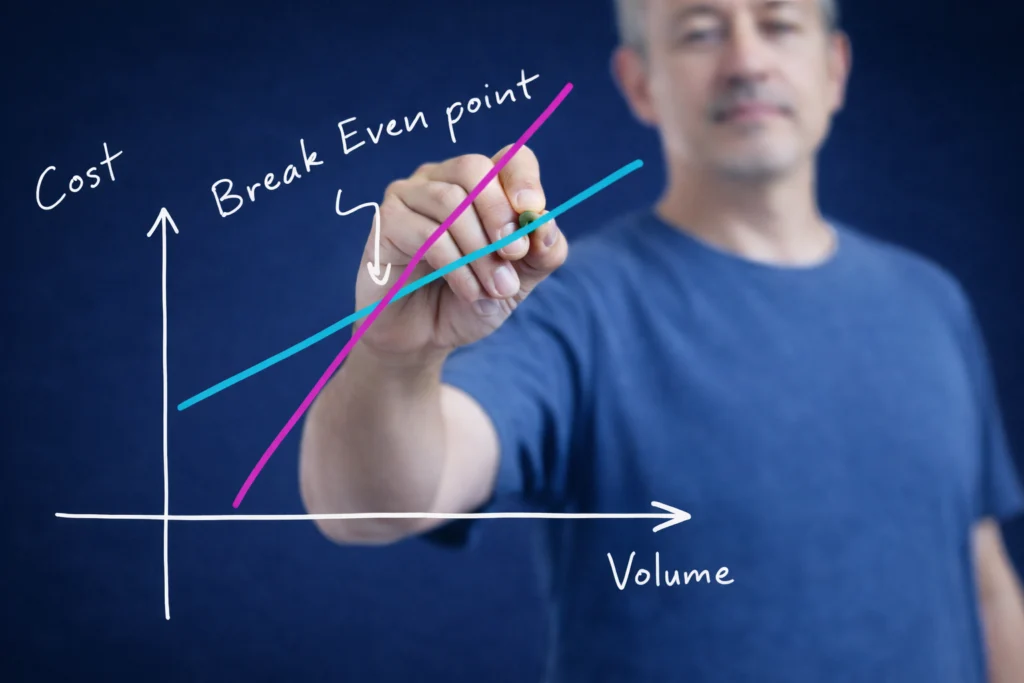
- Retail price: $35
- Unit cost: $9
- Gross margin per unit: $26
- Total launch cost: $30,000
Break-even occurs at approximately 1,154 units sold.
This number matters more than total revenue. A product can generate sales quickly and still be unprofitable if margins are too thin or costs are underestimated. Founders who track break-even understand exactly how much pressure is on their marketing and how quickly they need to move inventory.
- Healthy Margin Range
In premium wellness, margin is not optional. It is the fuel that allows a brand to acquire customers, absorb mistakes, and fund reorders. For a brand to be successful, you should aim to sell your product at 3X-5X your cost of goods.

- 55 to 75 percent gross margin
Below that range, customer acquisition becomes increasingly difficult. Advertising costs rise, promotions become risky, and there is little room to invest in creative, agencies, or partnerships.
Margins are not about greed. They are about sustainability.
- Price Strategy: Where Most Founders Get Stuck
Pricing is where financial reality meets market perception. Founders often price based on what feels reasonable instead of what the business actually requires.
General guidelines
- Pricing under $29 requires significant volume and operational efficiency
- Pricing above $59 usually requires strong clinical substantiation and brand authority
- The $35 to $49 range remains the most reliable corridor for direct-to-consumer wellness products
Price determines margin. Margin determines how aggressively you can market. Marketing determines how quickly you sell through inventory.
This chain reaction is why pricing decisions made early are difficult to undo later.
Why This Section Matters
Break-even math and margin strategy tie every earlier decision together. Formulation choices affect unit cost. Production tiers affect margin. Marketing costs affect break-even speed.
Founders who understand these relationships launch with intention. Founders who do not often feel surprised when a product sells but cash remains tight.
Clarity here prevents panic later.
05 Category Cost Differences
Not all supplement categories are created equal. Two products can sell for the same retail price and deliver completely different margins based solely on category. This is one of the most common blind spots for new founders.
Category affects ingredient cost, manufacturing complexity, testing requirements, packaging format, shipping weight, and marketing costs depending on how competitive your category is – all affecting long-term scalability. Choosing a category without understanding these tradeoffs can lock a brand into thin margins before it ever launches.
Below is a practical breakdown of how categories typically compare from a cost perspective.
- Least Expensive to Produce
- Basic capsules
- Energy formulas
- Standard/single-ingredient vitamin and mineral products
- Electrolytes

- Mid-Range Cost Categories
- Nootropics
- Stress and adaptogen formulas
- Gut health products
- Hormone support blends
- Most Expensive to Produce
- Probiotics
- Gummies
- Powdered blends with 20 or more active ingredients
- Greens, depending on ingredient count and sourcing
- Products flavored exclusively with natural ingredients
- Trademarked ingredient formulations

These formats are more expensive to manufacture, require stricter quality control, and often involve higher testing and packaging costs. Powdered drink mixes also tend to be heavier and bulkier, which increases shipping and storage expenses over time.
Founders can succeed in these categories, but they require stronger pricing, tighter forecasting, and more disciplined marketing to maintain profitability.
Why Category Choice Matters
Category selection is not just a product decision. It is a financial strategy.
Choosing a category that aligns with your pricing power, audience, and operational capacity protects margin and flexibility. Choosing the wrong category too early can create structural pressure that no amount of marketing can fix.
Understanding category economics helps founders build products that are not only compelling, but sustainable.
06 The Most Common Mistakes That Kill Early Momentum
- Launching Too Small
Launching with 1,000 units feels safe. In reality, it often creates more risk.
At this volume, unit costs are high and margins are tight. That leaves little room for marketing, promotions, or experimentation. If demand shows up, inventory disappears quickly and momentum stalls. If demand is slower than expected, fixed costs still need to be recovered.
Small launches rarely provide enough signal to confidently scale, and they often force founders into rushed reorders or expensive stopgaps.
Launching too small is not conservative. It is often restrictive.

- The Perfect Product Myth: Choosing Overbuilt Formulas
raw material cost
sourcing complexity
manufacturing variability
testing requirements
labeling constraints

- Constantly Making Changes Mid-Process
Indecision is expensive.
Small changes often feel harmless. Swapping an ingredient. Tweaking label copy. Revising a design. Adjusting claims late in the process. Over time, these changes stack up and quietly erode both budget and momentum.

- additional formulation reviews
- re-testing or revalidation
- label redesigns and reprints
- repeated compliance checks
- delayed production timelines
- Increased or duplicated shipping costs
Most of these changes do not materially improve the product. They are reactions to uncertainty, not strategic improvements.
Successful launches move forward with a clear plan, lock decisions when appropriate, and reserve iteration for future production cycles. Momentum is a competitive advantage. Protecting it matters.
- Ignoring Compliance
- label revisions
- reprints
- ad account issues
- website takedowns
- suspended Amazon & TikTok accounts
- Cancelled merchant accounts
- delayed launches
- potential issues with the FDA and FTC

- No Reorder Strategy
A surprising number of founders plan for their first purchase order and stop there.
In reality, the second purchase order often needs to be placed before the first one has sold through. Inventory may be moving, but cash is still tied up in production, marketing, and operating expenses.
Without a reorder plan, brands hit artificial ceilings. Sales slow, stock runs out, and momentum disappears.
A reorder strategy is not optional. It is part of launching responsibly.

- No Demand Mapping
Producing a great product does not guarantee it will sell.

- where customers will come from
- how they will discover the product
- how many units you can realistically sell per month
- which channels will carry the load
Without this, inventory becomes a guessing game. Even strong products can fail if demand was never modeled.
Founders who map demand launch with intention. Founders who do not rely on hope.
Why These Mistakes Matter
Each of these mistakes compounds the others. Launching too small magnifies marketing pressure. Overbuilt formulas squeeze margins. Constant changes slow execution. Compliance issues interrupt momentum. Weak reorder planning stalls growth. Lack of demand mapping creates uncertainty.
These mistakes sink more brands than any manufacturing issue ever will.
Avoiding them does not require perfection. It requires clarity, discipline, and commitment to execution.
07 How Next Day Nutra De-Risks Your Entire Launch
By this point in the guide, one thing should be clear: launching a supplement is not about having a good idea. It is about managing risk across formulation, cost, compliance, timing, and cash flow.
This is where experienced partners matter.
At NDN, we do not operate as a transactional manufacturer. We operate as a systems partner. Our role is to remove friction, reduce uncertainty, and help founders move from planning to production without the mistakes that stall most launches.
We de-risk supplement launches by addressing the exact failure points outlined in the previous sections.
- What That Looks Like in Practice
-
GMP-certified manufacturing
Products are produced in regulated facilities with documented quality controls, testing, and traceability.
-
Real-time production visibility
Founders know where their product is in the process and what comes next.
-
Fast, predictable timelines
Clear production schedules reduce delays and help founders plan marketing, inventory, and reorders with confidence.
-
Transparent cost modeling
Founders understand where costs come from and how decisions affect unit economics before committing capital.
-
Stock formulations to bypass R&D when appropriate
Proven formulas allow brands to skip unnecessary development time and expense while still launching credible products.
-
Compliance-first label reviews
Claims, structure, and formatting are reviewed upfront to prevent reprints, takedowns, or launch interruptions.
-
Integrated fulfillment
Manufacturing and fulfillment work together, reducing handoffs, delays, and logistical surprises.
-
Hands-on operator guidance
Our team works with founders who want to make decisions once and move forward, not revisit the same questions repeatedly..
From Clarity to Execution
This guide is designed to give you clarity. Clarity around costs. Clarity around risk. Clarity around what it actually takes to launch responsibly.
Execution is the next step.
When you are ready, you can schedule a complimentary Production Planning Call with NDN’s Strategy Team. During this session, we review your assumptions, pressure-test your plan, and provide an NDN cost estimate along with a realistic roadmap to production.
Final Takeaway
Launching a supplement product is not complicated, but it carries real consequences. The difference between brands that scale and brands that stall rarely comes down to creativity or ambition. It comes down to planning, discipline, and execution.
Founders who win understand their cost structure before committing capital. They choose production tiers intentionally. They protect margins, plan for reorders, and make decisions once, not repeatedly. Most importantly, they work with partners who understand the operational realities of manufacturing and fulfillment.
This guide is designed to replace uncertainty with clarity. It is not a shortcut and it is not a guarantee. It is a framework for making better decisions before money is spent and momentum is at risk.
When you are ready to move from planning to execution, the next step is straightforward.
Schedule a complimentary Production Planning Call. Our team will review your assumptions, walk through open questions, and provide a realistic cost estimate and production roadmap based on your goals and constraints.
Clear decisions build confidence. Confidence enables execution. Execution is what builds durable brands.