Industry Insights by The Experts
Industry Intelligence from the Disruptors Redefining Private Label Manufacturing
What Today’s Consumer Actually Wants in Supplement Products
Industry: Multi Location, Creators, Scaling Operators
The supplement industry often frames success around innovation, trends, and differentiation. Founders chase new ingredients, bigger formulas, and louder claims, assuming that more complexity equals more value.
Consumers see it differently.
Today’s buyers are practical, informed, and selective. They are not looking to be impressed. They are looking to feel confident in what they take every day. The brands that win long term are the ones that design products around real consumer behavior, not internal assumptions or industry noise.
The gap between what brands believe and what consumers actually want is where many products quietly fail.
What Brands Think Consumers Want
Most supplement brands still operate on a familiar set of assumptions:
- Longer ingredient lists signal higher value
- Novel or exotic ingredients feel innovative
- Bigger claims drive faster conversions
- Trend alignment matters more than usability
- Packaging should sell first and explain later
These assumptions are reinforced by competitive benchmarking, trade shows, and internal enthusiasm. They feel logical when viewed from inside the business.
From the consumer’s perspective, however, this approach often creates hesitation. Complexity introduces uncertainty. When buyers do not immediately understand a product, they default to caution rather than curiosity.
What Consumers Actually Look For
Consumers make supplement decisions quickly and emotionally, then justify them rationally. Their priorities are simpler and remarkably consistent across categories.
1. Clean, Recognizable Ingredients
Consumers want ingredient lists they can read and understand without research. They are not searching for the most complex blend or the most obscure actives. They want ingredients that feel intentional, familiar, and purposeful.
Industry data supports this shift. According to Innova Market Insights:
“Consumers are increasingly opting for clean label products that prioritize transparency, health, and ingredients perceived as natural. Many seek products with recognizable, minimal, and natural components.”
Source: Innova Market Insights, Global Clean Label Trends
Source: Innova Market Insights, Global Clean Label Trends
Clean label does not mean underpowered. It means disciplined. A shorter ingredient list with a clear rationale often communicates more credibility than an overcrowded panel that requires explanation.
As Steven Anderson, Founder and CEO of Next Day Nutra, puts it:
“Consumers are not asking for more ingredients. They are asking for more confidence. When people understand what they are taking and why, trust follows, and trust is what drives reorders.”
2. Fewer Artificial Additives and Preservatives
Beyond the primary activities, consumers pay close attention to what else is included. Artificial colors, fillers, and unnecessary preservatives increasingly raise red flags.
This does not mean consumers reject all processing or formulation aids. It means they want transparency and justification. When ingredients feel unnecessary or poorly explained, confidence erodes quickly.
Clear labeling and intentional formulation choices reduce perceived risk and increase trust.
3. Lower Sugar Without Sacrificing Taste
Consumers are actively reducing sugar intake, especially in daily-use supplements like greens, electrolytes, gummies, and functional beverages. At the same time, taste remains non-negotiable.
This is where many brands misstep. Removing sugar without solving for flavor, texture, and tolerance leads to poor adherence. Products that are unpleasant to consume do not earn reorders, regardless of how clean the label appears.
Successful brands treat flavor and tolerance as core product attributes, not secondary considerations.
4. Made in the USA as a Trust Signal
For many consumers, “Made in the USA” functions as a shortcut for trust. It signals accountability, oversight, and regulatory familiarity.
This matters most for products taken daily or purchased for family use. In these cases, perceived safety often outweighs novelty. Consumers are choosing peace of mind as much as performance.
5. Clear Benefits Over Big Promises
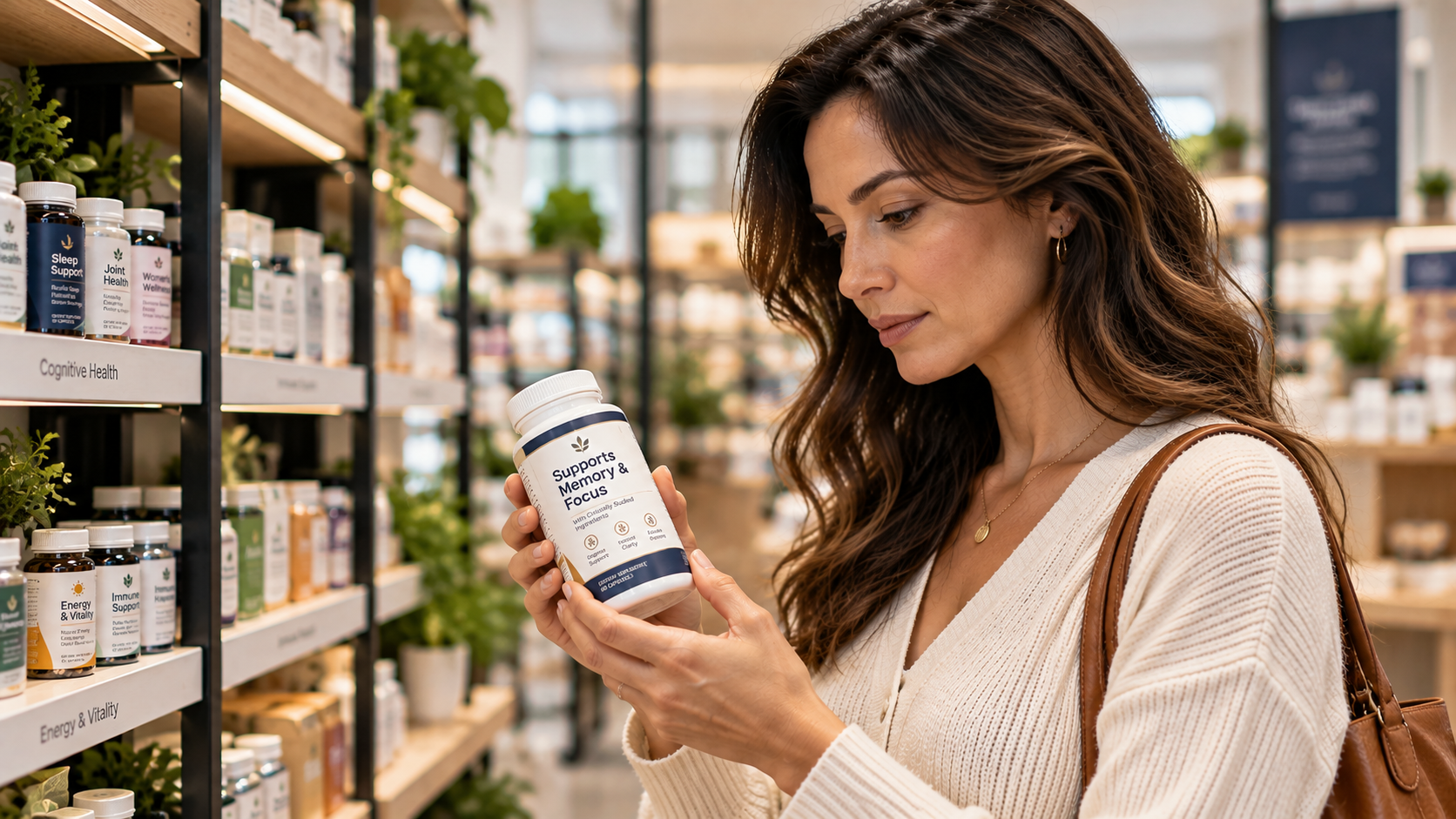
Consumers want straightforward answers. What does this product do? Who is it for? When should I take it? What should I expect?
Exaggerated claims create skepticism and disappointment. Clear, realistic benefit communication builds confidence and long-term loyalty. Brands that explain simply are more likely to be believed and remembered.

What Actually Drives Reorders
Initial purchases are driven by interest and marketing. Reorders are driven by experience.
Customers come back when the product delivers on expectations without friction. That includes consistent quality, reliable taste, and predictable results. Any mismatch between promise and reality undermines trust.
Trust is built on the second purchase, not the first.
Where Brands Miss the Mark
Many product failures are not the result of bad ideas, but of misplaced priorities. Common mistakes include designing formulas around claims instead of daily use, treating taste as an afterthought, or adding ingredients to appear competitive rather than useful.
Operational shortcuts show up as consumer friction. When products feel confusing, inconsistent, or overhyped, customers disengage quietly.
Designing Products From the Consumer Back
At Next Day Nutra, product development starts with how consumers actually evaluate and use supplements. Every decision is filtered through behavior, not assumptions.
That means intentional ingredient selection, early consideration of taste and tolerance, compliant and transparent labeling, and products built to earn reorders, not just launch-day attention.
The goal is not to chase trends. It is to build products consumers trust enough to use consistently.
What Founders Should Ask Before Launching
Before finalizing a product, founders should pause and ask:
- Can a customer understand this label in ten seconds
- Would I take this product every day
- Does this formula solve one clear problem
- Does the taste support consistency
- Does the packaging build trust rather than confusion
These questions reveal more about a product’s future than any trend forecast.
Listening Is the Competitive Advantage
Today’s supplement consumer is informed, selective, and values transparency. Brands that listen closely and design accordingly build stronger loyalty and more durable growth.
The future belongs to products that are clear, intentional, and grounded in real behavior.
If you design for trust, customers respond.
Ready to Build a Product Consumers Actually Want?
If you are planning a new supplement or rethinking an existing one, clarity at the start makes everything easier downstream. The right formulation, clean ingredients, compliant labeling, and a product experience customers trust do not happen by accident.
Our team works with founders, creators, and multi-location brands to design private label products that align with real consumer behavior and scale without unnecessary friction.
Industries
Recent Posts