Industry Insights by The Experts
Industry Intelligence from the Disruptors Redefining Private Label Manufacturing
Packaging: What Adds Cost and How to Stand Out Without Adding Unnecessary Overhead
Industry: Creators Scaling Operators Multi-Location
Packaging is often treated as a design decision.
In reality, it’s a cost structure, a brand signal, and a performance lever.
Research from Ipsos shows that 72% of consumers say packaging design influences their purchase decisions, and 67% say the materials used matter as well.
The problem is that most founders approach supplement packaging from the wrong angle.
They focus on how it looks.
They don’t fully account for how it impacts cost, margins, fulfillment, and long-term scalability.

Where Supplement Packaging Costs Actually Come From
Most founders assume packaging cost is driven by materials.
In reality, it’s driven by decisions.
The format you choose, how it’s labeled, how it ships, and how it’s stored all impact cost in ways that aren’t obvious at the beginning but compound quickly at scale.
The main cost drivers include:
- Container type: Bottles, jars, pouches, and stick packs all come with different cost structures, shipping implications, and storage requirements.
- Labeling method: Pressure-sensitive labels are cost-effective and flexible. Shrink sleeves and custom-printed packaging offer stronger branding, but increase costs significantly.
- Finishes and materials: Matte coatings, soft-touch finishes, embossing, and foil stamping all increase per-unit cost without always improving performance.
- Minimum order quantities (MOQs): Custom packaging often requires larger production runs, which ties up capital and increases risk.
- Freight and storage: Packaging decisions directly impact shipping costs, pallet configurations, and warehouse space.
Individually, these may seem like small decisions.
At scale, they compound into meaningful cost differences across every unit sold.
The mistake is evaluating these decisions in isolation.
The real cost shows up when they interact across manufacturing, fulfillment, and distribution.
The Most Common Packaging Mistakes Founders Make
Most packaging mistakes aren’t design problems.
They’re sequencing problems.
Brands make the right decisions at the wrong time, or optimize for the wrong constraint.
- Over-customizing too early: Founders invest in fully custom packaging before validating product demand, increasing upfront costs and limiting flexibility.
- Designing for aesthetics instead of scalability: Packaging may look premium but create issues in manufacturing, labeling, or fulfillment.
- Ignoring MOQ implications: Large minimum orders can lock capital into packaging before the product has proven traction.
- Choosing the wrong format: Certain packaging types may look appealing but create friction in shipping, storage, or customer use.
- Overlooking fulfillment realities: Packaging that is difficult to pack, label, or ship increases operational complexity and cost.
For example, a brand may invest heavily in custom packaging to create a strong first impression.
But if that packaging increases shipping costs, complicates fulfillment, or makes the product harder to use, it can reduce reorder rates and compress margins at the same time.
What looks like a branding decision becomes a growth constraint.
These decisions feel small early on.
At scale, they become expensive to reverse.
This is especially true when early product decisions are made without considering how they will perform at scale.
The Tradeoff: Cost vs Perceived Value
This is where most brands get packaging wrong.
Packaging is one of the fastest ways to signal value to a customer, but it’s also one of the easiest ways to destroy margin.
The goal is not premium packaging.
It’s packaging that feels premium relative to its cost.
Cheap packaging reduces perceived value.
Overbuilt packaging destroys margins.
In supplement packaging, perception is shaped by:
- structure and feel
- label clarity and readability
- consistency across products
- ease of use
Not by excessive finishes or unnecessary complexity.
As Alison Schroeder, Director of Design & Development at Next Day Nutra, explains:
“Most brands think premium packaging means adding more. More finishes, more customization, more detail. But customers don’t experience packaging that way. They notice how it feels, how easy it is to use, and whether it matches their expectations. That’s what actually drives perceived value.”
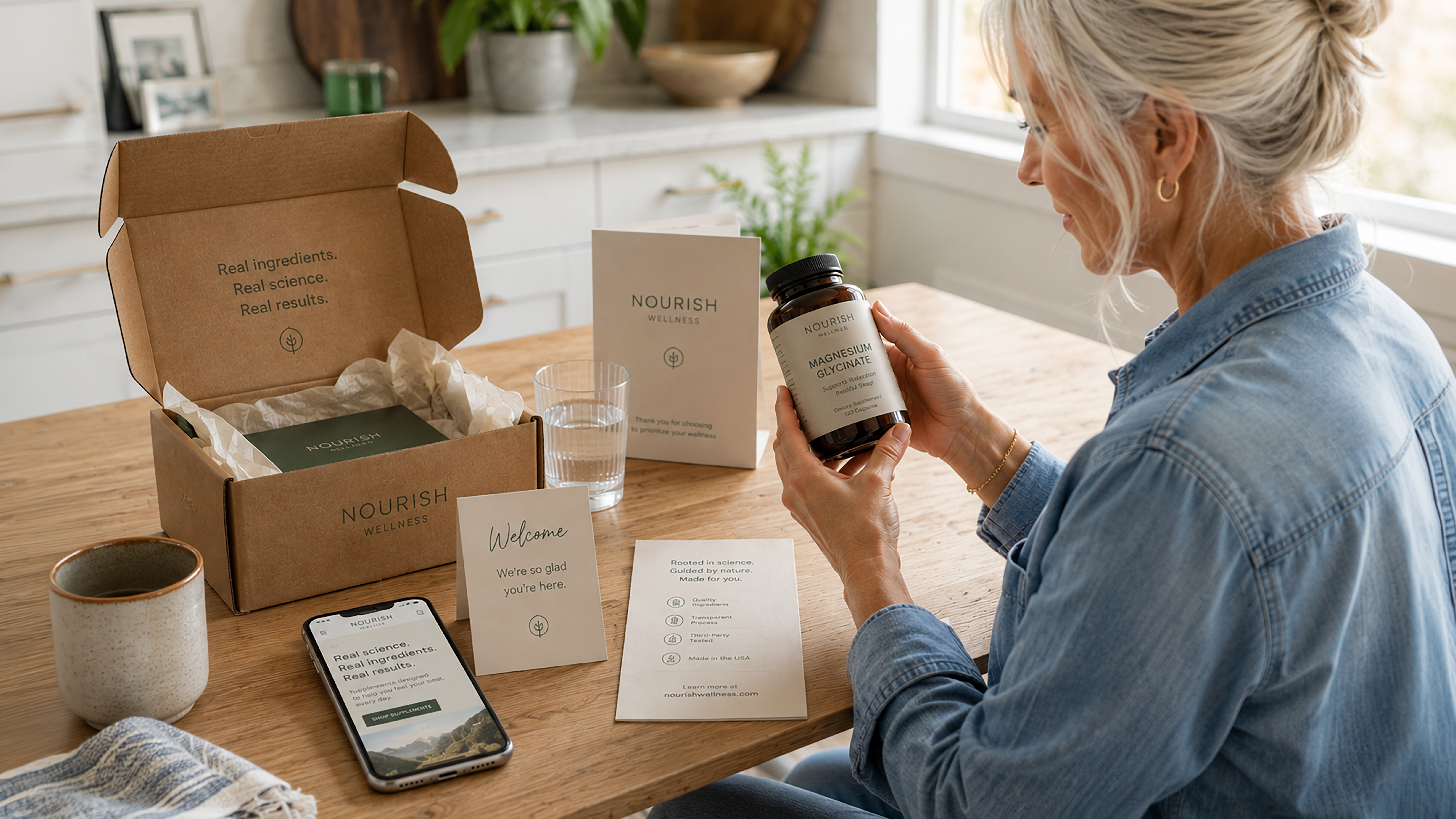
A clean, well-executed bottle with a strong label often outperforms a heavily customized package that increases cost without improving the customer experience.
This is where many brands overspend.
They invest in visible features instead of structural clarity, consistency, and usability, which are the things customers actually notice over time.
This is also why customer experience ultimately determines whether a product performs beyond the first purchase
Packaging by Product Type: Cost and Usability Tradeoffs
Packaging decisions are not just about cost.
They directly shape how the product is used, stored, and reordered.
Understanding these tradeoffs is critical for supplement product development.
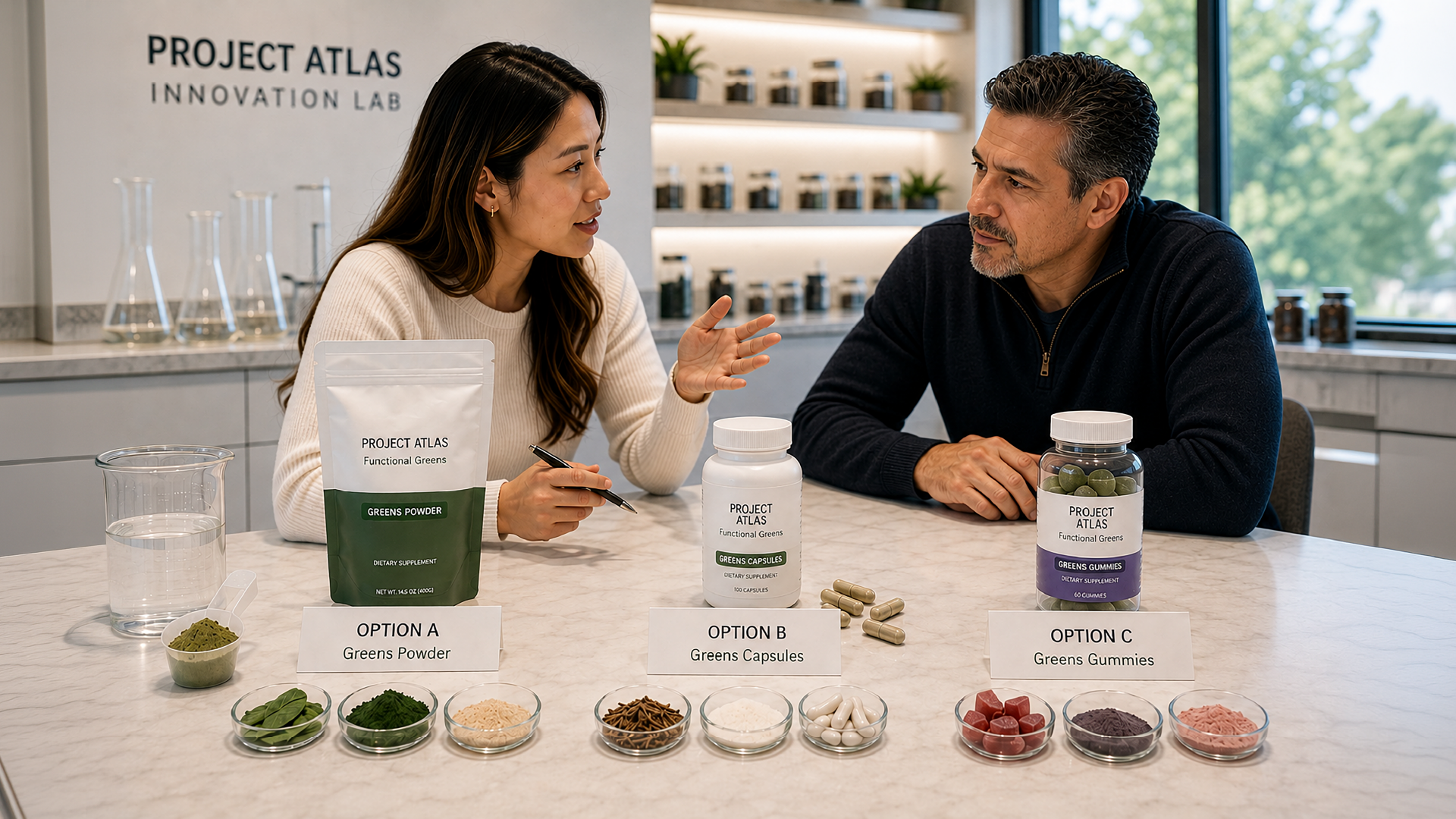
Powders: Typically packaged in tubs, jars, or pouches.
- Tubs offer strong shelf presence but increase shipping costs
- Pouches reduce cost but may lower perceived value
Capsules and tablets: Most commonly packaged in bottles.
- Bottles are cost-effective and scalable
- Blister packs offer differentiation but increase cost and complexity
Gummies: Usually packaged in jars or specialty containers.
- Packaging must balance shelf appeal, freshness, and compliance requirements
Each format impacts not just cost, but customer experience and repeat usage.
This is why packaging should be evaluated alongside customer behavior, not just manufacturing convenience.
How Smart Brands Approach Packaging
The strongest brands treat packaging as part of a broader system.
Not an isolated design decision.
They don’t ask “What looks best?”
They ask “What will hold up across 10,000 units, 100,000 units, and multiple SKUs?”
Strong brands commit to the following:
- align packaging with price point and positioning
- prioritize usability and repeat purchase behavior
- design for fulfillment and logistics efficiency
- maintain consistency across SKUs
- control costs without sacrificing perceived quality
This is where supplement branding and packaging intersect.
Packaging should reinforce the brand without introducing unnecessary overhead.
When to Invest vs When to Stay Lean
Not every brand needs fully custom packaging from day one.
Smart brands adjust their approach based on stage.
Early stage
- Focus on speed, flexibility, and cost control.
- Use stock packaging and proven formats.
Growth stage
- Improve consistency, refine branding, and optimize cost structure.
Scaled brands
- Invest in differentiation where it actually impacts perception and performance.
The mistake is investing too early or waiting too long.
Packaging as a Growth Lever
Packaging decisions affect more than aesthetics.
They impact:
- margins
- conversion
- customer experience
- reorder behavior
For brands developing new products, packaging should be evaluated alongside formulation, positioning, and pricing.
Pricing in particular is often more influenced by packaging decisions than most founders expect, especially as costs scale across every unit.
Because in the end, custom supplement packaging is not just about standing out.
It’s about building a system that performs.
Turning Packaging Into a Scalable System
Founders shouldn’t be worrying about “How do we make this look premium?”
Instead, they need to focus on “How do we make this perform at scale?”
We help brands design packaging systems that balance cost, perception, and operational efficiency so products don’t just look good, they work in the market.
If you’re developing a product or rethinking your packaging strategy, we can help:
Industries
Recent Posts