Industry Insights by The Experts
Industry Intelligence from the Disruptors Redefining Private Label Manufacturing
The Signals That Tell You Your Supplement Brand Is Actually Ready to Scale
Industry: Creators, Scaling Operators, Multi-Location
The Most Dangerous Time for a Supplement Brand Is Often Right Before Growth Accelerates
A lot of supplement brands mistake momentum for scalability.
A strong launch, a successful influencer campaign, or a sudden spike in sales can create the feeling that a business is ready for aggressive growth. More inventory gets ordered. Ad budgets increase. New SKUs get added to the roadmap. Expansion starts feeling inevitable.
Some of the biggest operational failures in the supplement industry happen during this exact stage. Demand starts increasing faster than the business can comfortably support, and the cracks that were manageable at smaller volumes suddenly become expensive.
Forecasting gaps create stockouts. Fulfillment delays start affecting customer trust. Customer support teams get overwhelmed. Margins tighten under operational pressure. Founder-dependent workflows that once helped the business move quickly start becoming bottlenecks.
Early growth can hide those weaknesses for a while because revenue growth creates the illusion that everything underneath the business is working correctly. Founders often respond to sudden demand spikes by scaling inventory aggressively before they fully understand whether the demand is durable. A product that surges from one viral campaign or creator mention can quickly leave a business overcommitted on inventory, packaging, and production capacity if reorder behavior never stabilizes afterward.
According to McKinsey’s State of the Consumer 2025 report, many consumer purchasing behaviors that originally appeared temporary have now become long-term patterns, forcing brands to focus more heavily on consistency, retention, and operational resilience rather than relying on short-term demand spikes alone.
That shift matters because sustainable growth rarely comes from isolated wins alone. TThe brands that scale successfully usually build repeatable customer behavior, stronger internal coordination, and better systems long before scaling strain fully arrives
In many cases, the strongest signals of scale readiness have less to do with headline revenue numbers and more to do with stability underneath the business. Demand becomes easier to forecast, customers reorder more consistently, and fulfillment performance stays reliable during higher-volume periods. Teams spend less time reacting and more time operating from clear systems and stronger coordination.
Those are usually the signals that separate temporary momentum from brands that are genuinely prepared to scale.
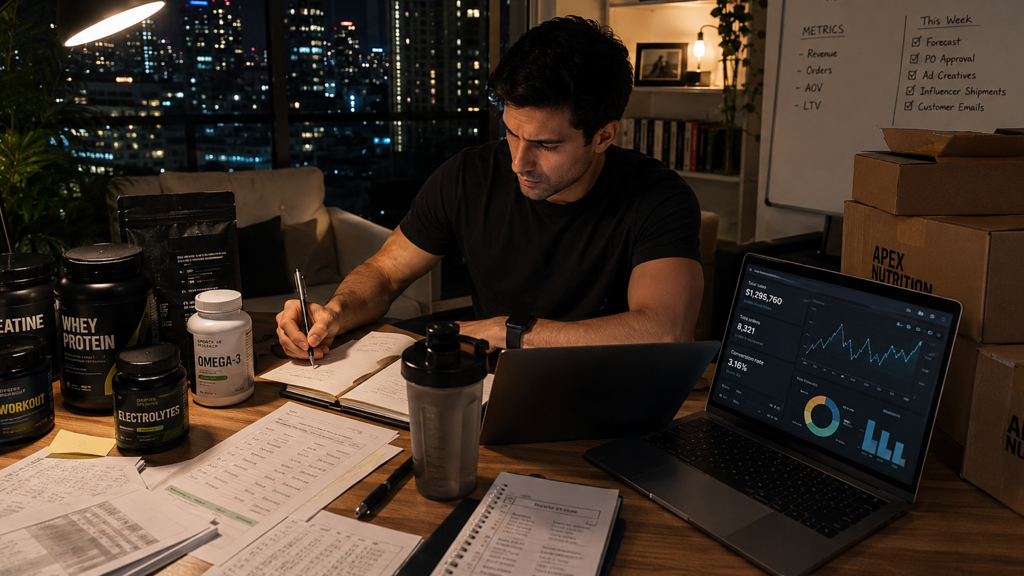
Revenue Alone Is a Terrible Scale Signal
One of the most common mistakes supplement founders make is assuming that rising revenue automatically means the business is becoming more scalable.
In reality, revenue by itself says very little about how resilient the business actually is.
A brand can experience explosive short-term growth from a single viral TikTok, a successful affiliate push, seasonal demand, or a creator partnership that briefly spikes traffic. On paper, those moments can look like confirmation that the business has entered a new stage of growth. Internally, though, the systems supporting that growth may still be fragile.
This is where a lot of brands get trapped.
A sudden increase in orders often creates pressure across every layer of the business at the same time. Inventory starts moving faster than forecasted, production timelines tighten, and customer support volume increases as fulfillment workflows become harder to manage consistently. Cash gets tied up in larger inventory purchases before long-term demand patterns are fully understood.
And when that initial growth event slows down, many brands realize they scaled their expenses and operational commitments faster than they scaled durable customer demand.
This becomes especially risky in supplements because inventory decisions are expensive and difficult to unwind. Larger production runs, custom packaging, additional SKUs, and expanded storage needs can lock brands into operational costs that only make sense if reorder behavior remains consistent over time.
That distinction matters more than many founders realize.
According to research cited by Harvard Business Review, increasing customer retention rates by just 5% can increase profits by 25% to 95%, reinforcing how much long-term business stability depends on repeat customer behavior rather than one-time acquisition spikes.
The brands that scale successfully usually start seeing signs of durable demand before they see massive expansion. Their customer behavior becomes easier to forecast. Their best-selling SKUs remain consistent over time. Revenue becomes less dependent on isolated campaigns or short-lived momentum.
That’s why scalable growth tends to feel more stable than explosive. The business starts operating from durable demand patterns instead of reacting to unpredictable spikes.
A supplement brand that can consistently generate reorders, maintain fulfillment performance during higher-volume periods, and forecast inventory with increasing confidence is usually in a much stronger position than a brand experiencing volatile revenue swings without operational consistency underneath them.
Sales Signals That Suggest Demand Is Becoming Durable
One of the clearest signs that a supplement brand is becoming scalable is that demand starts behaving more consistently over time.
Early-stage brands often experience highly inconsistent sales patterns. Revenue swings dramatically based on promotions, creator mentions, platform algorithms, or temporary product trends. Founders spend most of their time trying to recreate spikes rather than building systems around stable customer behavior.
As brands mature, those patterns usually begin to change.
Repeat customers start contributing a larger percentage of monthly revenue. Subscription retention improves. Best-selling SKUs become easier to forecast because demand stops fluctuating so aggressively from month to month. Customer acquisition also becomes less chaotic because the brand starts understanding which channels, offers, and messaging consistently produce qualified buyers.
That shift matters across the entire business because more durable demand patterns create stronger forecasting, inventory planning, and financial decision-making.
Inventory planning becomes more accurate. Manufacturing timelines become easier to manage. Cash flow becomes easier to forecast. Marketing decisions become less reactive because the business is no longer relying entirely on finding the next spike in traffic.
This is also the stage where many supplement brands begin separating real customer demand from temporary audience excitement.
A product that performs well for one week after a creator mention may generate attention. A product that customers consistently reorder several months later usually signals something much more valuable. The same applies to brands that continue generating stable sales even after a major promotion or launch cycle ends.
One of the clearest signs that a supplement brand is becoming scalable is that demand starts behaving more consistently over time.
Early-stage brands often experience highly inconsistent sales patterns. Revenue swings dramatically based on promotions, creator mentions, platform algorithms, or temporary product trends. Founders spend most of their time trying to recreate spikes rather than building systems around stable customer behavior.
As brands mature, those patterns usually begin to change.
Repeat customers start contributing a larger percentage of monthly revenue. Subscription retention improves. Best-selling SKUs become easier to forecast because demand stops fluctuating so aggressively from month to month. Customer acquisition also becomes less chaotic because the brand starts understanding which channels, offers, and messaging consistently produce qualified buyers.
That shift matters across the entire business because more durable demand patterns create stronger forecasting, inventory planning, and financial decision-making.
Inventory planning becomes more accurate. Manufacturing timelines become easier to manage. Cash flow becomes easier to forecast. Marketing decisions become less reactive because the business is no longer relying entirely on finding the next spike in traffic.
This is also the stage where many supplement brands begin separating real customer demand from temporary audience excitement.
A product that performs well for one week after a creator mention may generate attention. A product that customers consistently reorder several months later usually signals something much more valuable. The same applies to brands that continue generating stable sales even after a major promotion or launch cycle ends.
Over time, repeatable demand gives teams more room to plan proactively instead of reacting constantly. Teams can make longer-term decisions because the business is no longer operating entirely around short-term uncertainty.
That stability is often a stronger signal of scale readiness than rapid top-line growth by itself.
Marketing Signals That Your Brand Has Outgrown “Test Mode”
Most supplement brands spend their early stages in constant experimentation mode.
Messaging changes every few weeks. Creative direction keeps shifting. Offers get rebuilt repeatedly. Customer acquisition depends heavily on trying to find the next winning campaign before performance drops.
Some level of testing is healthy, especially during early growth stages. But scalable brands eventually reach a point where certain parts of the business start becoming more repeatable.
The strongest marketing systems eventually stop relying entirely on isolated wins and begin generating steadier demand over time.
Content becomes more structured. Brand positioning becomes easier for customers to understand quickly. Certain offers continue performing well across multiple campaigns instead of burning out immediately. Customer acquisition channels become more measurable and easier to forecast.
You also start seeing stronger signals that the market understands the brand beyond paid advertising alone.
Customers leave more organic reviews. User-generated content increases. Referral behavior improves. Creators begin reaching out without being aggressively recruited. Returning customers start recommending products to friends or reposting experiences voluntarily.
Those signals matter because they usually indicate the business is building trust instead of simply buying attention.
Brands that are still entirely dependent on constant reinvention often struggle once scaling strain increases. Every new campaign carries enormous pressure because there is very little structure supporting customer acquisition behind the scenes. Marketing teams stay reactive. Forecasting becomes difficult. Operational planning becomes inconsistent because demand remains volatile.
As supplement brands mature, the marketing side of the business often starts looking less chaotic. The company develops clearer positioning, more reliable acquisition patterns, and stronger feedback loops between customer behavior and marketing decisions.
That shift tends to create a much stronger foundation for long-term scale.
Operational Signals Most Founders Ignore Until It’s Too Late
Operations usually become the deciding factor between brands that scale smoothly and brands that stall under pressure.
The challenge is that operational weaknesses are easier to hide when order volume is smaller. A founder can manually solve problems for a while. Teams can work around broken workflows temporarily. Inventory mistakes can sometimes be corrected fast enough before customers fully notice.
Growth changes the margin for error.
Small inefficiencies start compounding quickly once order volume increases. Forecasting gaps create larger inventory problems. Delayed communication between manufacturing and fulfillment creates missed timelines. Shipping inconsistencies begin affecting customer retention. Teams spend more time reacting to issues than improving systems.
One of the clearest signs that a supplement brand is becoming more scalable is that the business becomes more organized internally as growth increases instead of becoming harder to manage.
Inventory planning starts stabilizing because demand patterns are easier to forecast. Cleaner inventory forecasting also allows brands to make larger purchasing decisions with more confidence. Reorder timelines become more organized. Fulfillment performance remains consistent during promotions and higher-volume periods. Teams have clearer visibility into bottlenecks before problems escalate into emergencies.
You also start seeing fewer situations where growth immediately creates operational chaos.
That distinction matters because some brands can generate growth, but very few can absorb growth efficiently.
A supplement company that consistently struggles with stockouts, fulfillment delays, customer support overload, or constantly changing production schedules may still be capable of generating revenue. Sustaining profitable growth becomes much harder once those internal problems start affecting customer trust and retention at the same time.
As systems improve, leadership teams also start spending their time differently.
Instead of operating entirely in reactive mode, teams gain the ability to forecast more confidently, improve processes proactively, and make longer-term strategic decisions without every growth event turning into a firefight.
That operational stability is often one of the clearest indicators that a brand is genuinely prepared for scale.
One of the Biggest Scale Signals: The Founder Stops Being the Entire System
Many supplement brands hit a ceiling when too much of the business still depends on the founder personally holding everything together.
In early stages, that level of involvement often feels normal. Founders approve every inventory order, answer customer issues directly, manage creator relationships, review marketing assets, coordinate production timelines, and solve operational problems in real time. That level of intensity can even create an advantage during startup phases because decisions happen quickly and communication stays centralized.
The problem is that founder-driven execution becomes harder to sustain as complexity increases.
As order volume increases, customer communication becomes harder to manage, SKU expansion creates additional forecasting pressure, and growing marketing channels add complexity across fulfillment, inventory, support, and production. Eventually, the business starts scaling faster than one person’s ability to manually coordinate everything.
That’s usually when growth begins exposing structural weaknesses underneath the company.
Teams become dependent on approvals for routine decisions. Communication bottlenecks slow execution. Tribal knowledge stays trapped inside a few people instead of being documented into repeatable systems. Visibility across the business becomes inconsistent because the company relies more on memory and reaction than documented processes.
One of the strongest signs that a supplement brand is becoming truly scalable is when the business starts operating consistently without requiring constant founder intervention to keep everything moving.
That does not mean the founder becomes uninvolved. It means the company develops systems, workflows, communication structures, and stronger coordination that allow growth to happen more sustainably.
The businesses that scale most effectively usually create environments where:
- forecasting is documented
- fulfillment workflows are standardized
- communication is visible across teams
- recurring problems are tracked instead of repeatedly solved from scratch
- operational knowledge becomes transferable instead of founder-dependent
That shift often marks the difference between a business that can grow temporarily and one that can continue scaling without burning out its leadership team in the process.
The Brands That Scale Best Usually Prepare Before They “Need” To
One of the biggest misconceptions around scaling is that infrastructure should only improve after growth arrives.
In reality, the strongest supplement brands usually start strengthening operations before growth pressure fully hits the business.
They improve inventory visibility before stockouts become constant. They build stronger manufacturing relationships before production timelines tighten. They create more structured fulfillment systems before order volume becomes difficult to manage. They invest in forecasting discipline before cash flow becomes unstable.
That preparation matters because growth tends to magnify existing weaknesses much faster than most founders expect.
A fulfillment process that feels manageable at 200 orders per week can become chaotic at 2,000. A forecasting system built around guesswork becomes expensive once larger inventory commitments are involved. Customer support gaps that once created occasional frustration can quickly damage retention when delays start affecting larger order volumes.
The brands that navigate growth successfully usually treat operational infrastructure as part of the growth strategy itself, not as cleanup work for later.
“A lot of brands focus on scaling sales first and assume operations will catch up later. The companies that grow sustainably usually make infrastructure decisions earlier than they think they need to. Once growth exposes weak systems, fixing those problems becomes significantly more expensive." — Steven Anderson, Founder and CEO, Next Day Nutra
That mindset often creates advantages that customers never directly see but consistently experience. Orders arrive on time. Inventory remains available more consistently. Communication improves. Customer trust compounds. Teams operate with less chaos internally, which creates a smoother experience externally.
And over time, those operational advantages become difficult for competitors to replicate quickly.
Sustainable scale rarely comes from marketing performance alone. It usually comes from alignment between demand generation, operational execution, fulfillment consistency, and customer experience working together at the same time.
Conclusion
Sustainable Growth Usually Looks More Stable Than Exciting
A lot of supplement brands assume scale should feel explosive.
In reality, the businesses that scale most successfully often become more stable as they grow.
Customer behavior becomes easier to predict. Inventory planning becomes more structured. Fulfillment performs more consistently under pressure. Teams spend less time reacting to emergencies and more time improving systems proactively. Revenue starts compounding from retention and repeatability instead of depending entirely on finding the next spike in attention.
According to Harvard Business Review, even small improvements in customer retention can create significant long-term profit increases, reinforcing how much durable growth depends on consistency rather than short-term momentum alone.
The supplement brands that scale best usually avoid building the business around every trend or temporary spike in demand. They tend to build stronger systems, clearer internal coordination, and repeatable customer behavior before growth pressure forces those changes onto them.
Because the real signal that a brand is ready to scale usually has less to do with how fast revenue grows and more to do with how well the business continues functioning while it grows.
Ready to Scale With Stronger Infrastructure Behind the Brand?
Sustainable growth usually depends on more than strong marketing or rising sales. The brands that scale successfully tend to build stronger systems around fulfillment, forecasting, manufacturing, and customer experience before growth pressure exposes weaknesses underneath the business.
Next Day Nutra helps supplement brands create the operational foundation needed to support long-term growth, whether that means improving fulfillment consistency, preparing for larger inventory cycles, optimizing production workflows, or building more scalable infrastructure across the business.
Book a strategy call with our team here:
Industries
Recent Posts