Industry Insights by The Experts
Industry Intelligence from the Disruptors Redefining Private Label Manufacturing
What Does Your Supplement Brand Actually Own? Formula Rights, Labels, Testing Records, and Manufacturing Files
Industry: Creators, Scaling Operators, Multi-Location, Medical Groups
Why Owning a Supplement Brand Doesn’t Mean You Own Everything Behind It
A supplement brand can spend months developing a product, investing in formulation, packaging, testing, and manufacturing before the first bottle reaches a customer. By launch, the founder may have paid for nearly every stage of development. But that investment doesn’t necessarily establish ownership of everything behind the finished product.
A brand may own its name, trademarks, and packaging designs while relying on its manufacturer for the underlying formula, technical specifications, testing records, and production processes. Some of these materials may belong to the brand, others may be proprietary to the manufacturer, and certain documents may be available only under the terms of their agreement.
During a successful manufacturing relationship, these distinctions rarely receive much attention. Production runs on schedule, products meet expectations, and the brand focuses on sales and customer growth. Questions about ownership tend to surface when something changes.
Consider a supplement company that invests in developing a custom hydration formula. The manufacturer conducts ingredient research, develops several prototypes, adjusts the flavor, and completes the testing needed for launch. The product becomes a bestseller, and two years later, the brand decides to expand production to another facility.
That’s when the founder discovers the original agreement never clearly addressed whether the formula could be manufactured elsewhere.
The company may now need to negotiate additional rights, obtain technical specifications, or repeat development work before another facility can produce the product. What initially appeared to be a straightforward manufacturing decision has become a potential source of delays and unexpected costs.
For founders, understanding product ownership early can prevent these complications. The first place to examine is the research and development process, where the rights associated with a formula often begin taking shape.
Who Owns the R&D Behind Your Supplement Formula?
Working with an experienced supplement manufacturer gives brands access to formulation expertise, specialized equipment, and technical knowledge they may not have internally. Development teams can help evaluate ingredient compatibility, dosage requirements, delivery formats, stability, and the practical limitations of commercial production.
These capabilities can significantly shorten the path from concept to market.
McKinsey reports that externally sourced innovations are typically commercialized 40% faster than internally developed ideas, partly because suppliers have already completed portions of the development and validation work. Although the research spans industries beyond supplements, it illustrates the value experienced development partners can bring.
The ownership question becomes more complicated when a manufacturer contributes its own intellectual property to a project.
Suppose a brand commissions a custom sleep supplement. The manufacturer begins with an existing formulation approach, adjusts ingredient ratios, evaluates capsule capacity, and develops a finished product that meets the brand’s requirements.
The brand has funded the project, but the manufacturer may have contributed proprietary formulations, processing knowledge, or other intellectual property developed before the relationship began.
The agreement needs to establish how those contributions are treated.
Some development arrangements give brands ownership of newly created formulas.Others provide licenses to use the resulting product while the manufacturer retains certain rights.
Agreements may also distinguish between existing intellectual property and new work developed specifically for the customer.
McKinsey notes that companies collaborating with suppliers may agree to share all or only part of the intellectual property created during a project.
For supplement founders, the important question is what the R&D investment actually includes. Development fees, ownership rights, exclusivity, and access to technical deliverables should be clearly defined before the work begins.
Otherwise, a founder may finish development with a market-ready product but fewer rights than expected.
What Rights Do You Have to Your Finished Formula?
Once development is complete, the focus shifts from creating the formula to determining how the brand can use it.
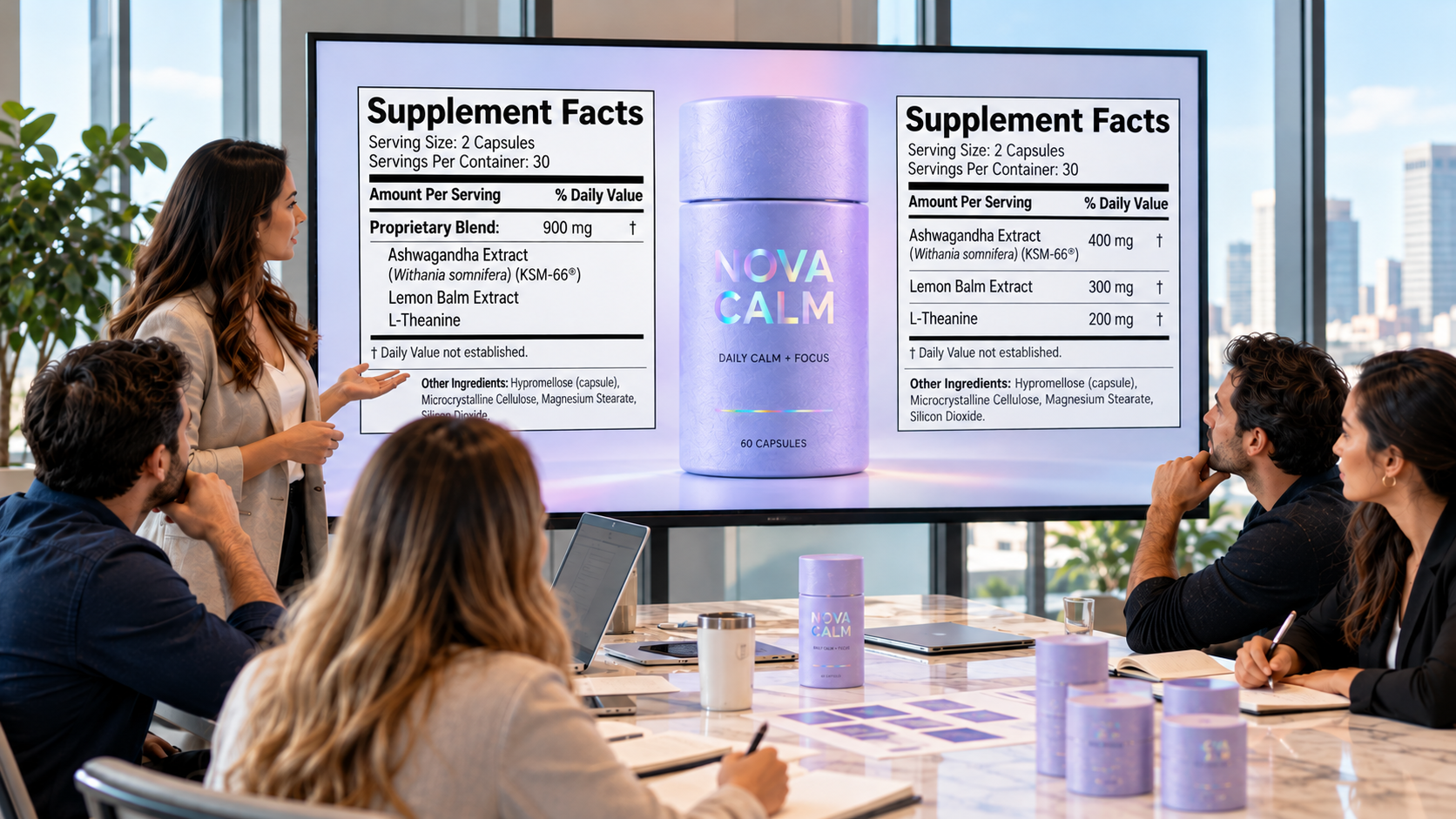
A company might receive a finished formulation document listing the ingredients and their amounts. That information is valuable, but it doesn’t necessarily establish whether the company can manufacture the product elsewhere, modify it independently, or prevent competitors from using the same formulation.
Those rights depend on the applicable agreements and intellectual property involved.
In an article published by the Association of Corporate Counsel (ACC), legal experts examining intellectual property risks in outsourcing explain why paying for development work does not automatically transfer ownership of the resulting intellectual property. Written assignments and licensing terms play an important role in determining what the customer can use and control.
For supplement brands, three distinctions deserve particular attention.
Ownership determines which intellectual property rights belong to the brand. Licensing establishes how the brand may use intellectual property owned by another party. Exclusivity addresses whether the manufacturer or another rights holder can offer the same formulation to other customers.
A founder developing a differentiated product may place considerable value on exclusivity. Another brand using a standard private-label formula may prioritize speed, cost, and manufacturing reliability instead.
Neither arrangement is inherently better. The appropriate terms depend on the product strategy and the level of control the brand needs.
This is one reason the decision between custom formulation and stock products deserves attention before development begins.
There is also a practical limitation worth understanding. Even when a brand owns its formula, reproducing the finished product may require additional technical information, manufacturing expertise, and facility-specific validation.
Ownership establishes certain rights. Successful production still depends on having the necessary information and capabilities to exercise them.
Why Labels, Testing Records, and Manufacturing Files Matter
A finished supplement depends on much more than its ingredient list. Packaging files, raw material specifications, laboratory results, and production instructions all contribute to making the product consistently.
These documents serve different purposes, and brands should understand what they can access before they need it.
Labels and packaging
A brand may own its label design but lack the editable artwork, dielines, or print specifications needed to work with another packaging supplier.
This can create unnecessary work when changing bottle sizes, updating claims, or introducing new packaging.
Founders should establish who owns the original artwork, which production-ready files will be delivered, and whether those files can be used with other vendors.
Testing and quality records
Certificates of analysis, ingredient specifications, and laboratory results help document whether materials and finished products meet established quality requirements.
Manufacturers also maintain records required under dietary supplement current good manufacturing practice regulations. However, regulatory recordkeeping responsibilities and a brand’s contractual access rights are separate considerations.
A brand should know which test results and quality documents it will routinely receive, what additional records can be requested, and how those requests will be handled.
Access becomes particularly important when investigating a quality concern, reviewing product consistency, or evaluating a potential manufacturing partner.
Manufacturing specifications and production files
Manufacturing documentation can include master manufacturing records, ingredient specifications, production instructions, and process parameters.
Some information may be specific to the brand’s product. Other details may reflect proprietary methods or technical knowledge belonging to the manufacturer.
A brand should not assume that ownership of a formula automatically includes unrestricted access to every internal manufacturing file.
Instead, the agreement should identify the product information the brand will receive and any limitations on its use.
The practical goal is to ensure the brand has appropriate visibility into its product while respecting the manufacturer’s legitimate intellectual property and confidentiality obligations.
These details become especially important when the brand needs to make a change.
What Happens When You Need to Change Manufacturers?
A growing supplement company may eventually need a different manufacturing partner. The decision could be driven by production capacity, new delivery formats, lead times, quality concerns, or changing commercial requirements.
Moving production involves more than sending a formula to another facility. The new manufacturer must evaluate the product, qualify materials and suppliers as needed, establish suitable production processes, and confirm it can meet the required specifications.
Clear ownership rights and complete product documentation can make that process easier to plan. Missing information can add time and cost.
Take a gummy supplement developed by a manufacturer with specialized flavor and texture capabilities. The brand may own the finished formula but still depend on proprietary processing knowledge to achieve the same consistency, taste, and stability.
A second manufacturer may need to adjust the formula or develop a different production method to achieve comparable results. Additional trials and testing could delay the transition.
Some redevelopment may be unavoidable because facilities use different equipment, processes, and suppliers. But the brand should be able to distinguish between work that is technically necessary and work caused by missing rights or documentation.
The ACC article also emphasizes the importance of addressing intellectual property rights and transition arrangements before an outsourcing relationship ends.
For supplement brands, those arrangements can help clarify what information and assistance will be available if production needs to move.
“When you're developing a product, you need to understand exactly what you're paying for and what you'll have access to when the work is complete. Those details become especially important when your brand starts to scale.”
Steven Anderson, CEO Next Day Nutra
The financial impact of a transition extends beyond formulation work. Brands may need to carry additional inventory, absorb development expenses, or adjust launch and replenishment schedules while a new facility prepares for production.
A manufacturing transition will always require planning. Clear agreements and accessible product information give founders a better understanding of the work involved before they commit to a change.
What Supplement Founders Should Clarify Before Development Begins
The best opportunity to address ownership questions is before a brand invests heavily in product development.
At that stage, the founder and manufacturer can establish what the development fee covers, which rights will be transferred, and which information will remain proprietary.
For custom R&D, the agreement should distinguish between the manufacturer’s existing intellectual property and new work created for the brand. It should also explain whether the finished formula is owned, licensed, or subject to restrictions on its use.
If exclusivity is important, the terms should define what is exclusive, for how long, and under what conditions.
Documentation expectations deserve the same attention. Founders should know which formulation specifications, testing results, packaging files, and other deliverables they will receive during development and production.
The agreement should also address what happens if the manufacturing relationship ends, including continuing formula rights, confidentiality obligations, and any agreed transition assistance.
These are commercial and legal questions that should be reviewed before signing, particularly when a custom formulation represents a significant investment.
Clear expectations help both parties work more effectively. The manufacturer understands what it is expected to deliver, and the brand understands the rights and information available to support its product.
Product Control Begins With Knowing What You Own
A supplement brand can build a successful product through outsourced R&D and manufacturing without owning every process or piece of intellectual property involved. Experienced manufacturing partners bring valuable capabilities, and proprietary expertise is often part of what makes those relationships worthwhile.
The important consideration is whether the arrangement supports the brand’s intended use of the product, both today and as its needs evolve.
A founder who understands the formula rights, development deliverables, and documentation available under an agreement can evaluate future manufacturing decisions with fewer surprises.
At Next Day Nutra, we help supplement brands navigate formulation development and manufacturing requirements, with a focus on clear expectations, quality, and reliable production.
If you’re developing a new product or evaluating your current manufacturing arrangement, Schedule a Consultation to discuss your formulation and production needs.
Industries
Recent Posts