Industry Insights by The Experts
Industry Intelligence from the Disruptors Redefining Private Label Manufacturing
The Supplement Pricing Trap: Why Many Brands Either Overprice or Undervalue Their Product
Industry: Scaling Operators, Creators
Pricing Is About More Than Profit
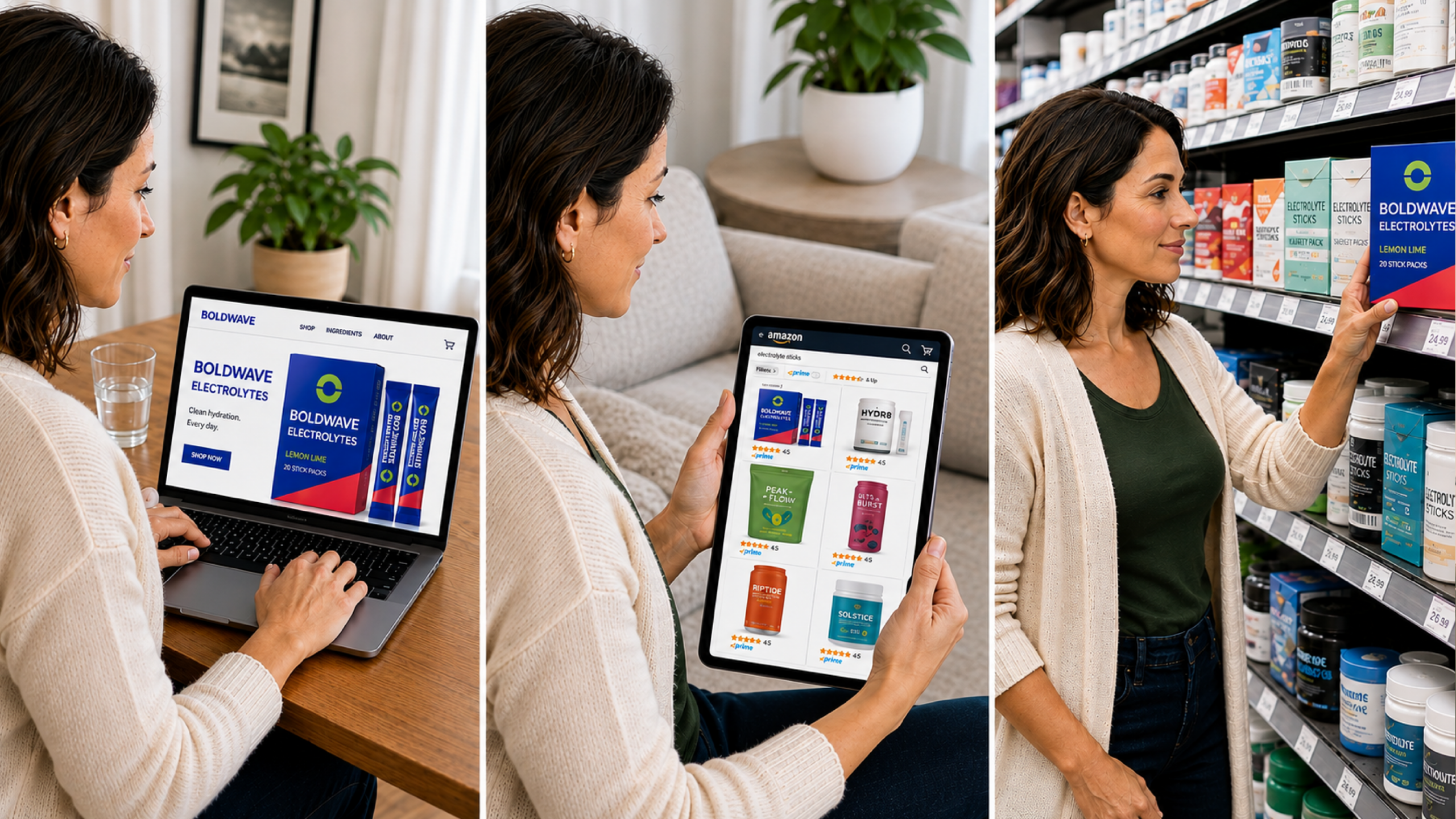
Walk through the supplement aisle of any retailer or browse the top-selling products on Amazon, and you’ll quickly notice something interesting. Products with nearly identical ingredients can vary in price by $20 or more.
At first glance, that doesn’t make much sense. Shouldn’t similar products sell for similar prices?
Not necessarily.
Pricing is one of the most misunderstood decisions supplement founders make because it often starts with a simple question: What does it cost to make this? While understanding your costs is essential, it’s only one piece of a much larger equation.
The price on your label communicates far more than your margin. It shapes expectations, influences trust, affects who buys your product, and determines how much flexibility you’ll have to grow your business in the future.
Many brands fall into one of two traps. They underprice their products because they’re afraid customers won’t pay more, or they overprice them before they’ve built enough value to justify the premium. Both approaches create problems that can be difficult to overcome.
The brands that build lasting businesses understand that pricing sits at the intersection of finance, marketing, and brand strategy. Few decisions influence all three as directly.
Most Pricing Decisions Start in the Wrong Place
Ask a new supplement founder how they arrived at their retail price, and the answer usually follows the same pattern.
They calculate manufacturing costs, add packaging, estimate shipping, choose a desired margin, then compare the final number against a few competitors.
On paper, it seems logical.
Imagine a collagen powder with the following costs:
- Manufacturing: $11
- Packaging: $3
- Freight and fulfillment: $5
The total landed cost is $19. To maintain healthy margins, the founder prices the product at $39.99 because doubling costs feels like a safe rule of thumb.
The problem is that customers never see this spreadsheet.
They aren’t evaluating your cost structure. They’re evaluating whether your product feels worth $39.99 compared to every other option they could purchase.
McKinsey captures this distinction well:
“Economic value to the customer is simply the purchase price that customers should be willing to pay for your product, given the price they are currently paying for the reference product and the added functionality and diminished costs provided by your product.”
Rather than asking what your product costs to produce, customers ask a different question:
“Is this product worth the price compared to everything else available?”
That comparison includes far more than ingredients. They’re evaluating packaging, reviews, brand reputation, ingredient transparency, convenience, educational content, customer service, subscription options, and even how confident they feel clicking Buy.
This is why two products with nearly identical formulations can command dramatically different prices. One has built enough trust and perceived value to support premium pricing. The other hasn’t.
Your costs determine whether a price is financially sustainable. Your customers determine whether it’s believable.
Understanding the difference is the first step toward building a pricing strategy that supports long-term growth instead of simply covering expenses.
Price Is One of Your Strongest Brand Signals
Long before a customer experiences your product, they’ve already started forming opinions about it.
Price is one of the first signals they receive.
Imagine you’re comparing two magnesium supplements.
The first costs $19.99. It has a generic-looking label, only a handful of reviews, and offers little explanation about ingredient sourcing or formulation.
The second sells for $39.99. The packaging feels polished, the website explains why specific ingredient forms were selected, customer reviews are plentiful, and the brand invests heavily in educational content.
Without opening either bottle, many shoppers will naturally expect the second product to deliver a better experience.
Whether that assumption is always correct isn’t the point. It’s how consumers make decisions every day.
Price influences perception because customers rarely have perfect information. Instead, they rely on signals that help them judge quality, credibility, and risk before making a purchase.
This is especially true in the supplement industry, where most consumers can’t independently evaluate manufacturing standards, ingredient sourcing, or formulation quality. They look for indicators they can understand.
Pricing becomes one of those indicators.
Charging more only works when the experience justifies the premium. Brands that fail to deliver on that promise often earn disappointing reviews and weaker customer retention.
The opposite can be just as damaging.
Consistently pricing below the market can unintentionally communicate that your product is less effective, lower quality, or simply another commodity competing on cost alone.
The strongest brands don’t choose a price because it’s high or low. They choose a price that reinforces the promise they’re making to customers and then work relentlessly to deliver on that promise across every interaction.
When price and experience align, trust grows. When they don’t, customers notice.

The Hidden Cost of Underpricing
Many founders believe lower prices make it easier to win customers.
Sometimes they do.
The problem is they often make it much harder to build a durable business.
Imagine two supplement brands that each sell 1,000 bottles of the same product every month.
One prices its product at $34.99. The other charges $49.99 because it has invested in stronger branding, better packaging, educational content, and a customer experience that supports the premium.
That $15 difference isn’t simply additional profit sitting in a bank account.
It’s fuel for growth.
Those additional dollars can be reinvested into higher-quality creative, larger advertising budgets, improved packaging, customer education, inventory planning, subscription programs, faster fulfillment, or the research and development needed to launch the next product. They also give brands the flexibility to run promotions intentionally instead of discounting simply to maintain sales.
Meanwhile, the lower-priced brand has fewer options.
When advertising costs rise, margins disappear faster. When ingredient prices increase, there’s little room to absorb the impact. Hiring customer support, improving packaging, or investing in better branding becomes significantly more difficult because every dollar is already committed.
“Pricing is one of the few decisions that’s difficult to fix later. Changing your formula or packaging is relatively straightforward. Repositioning what customers believe your product is worth is much harder.” — Steven Anderson, Founder & CEO, Next Day Nutra
Pricing decisions made today also influence opportunities tomorrow.
A retail price that works for direct-to-consumer sales may leave little room to expand into wholesale, retail distribution, affiliate partnerships, or marketplaces where additional fees and margin expectations quickly change the economics.
Over time, the business becomes increasingly dependent on volume just to maintain the same level of profitability.
Underpricing also shapes the type of customer you attract.
Brands competing primarily on price often attract shoppers who are willing to switch products as soon as they find a lower-cost alternative. That creates a constant cycle of discounts, promotions, and customer acquisition efforts simply to replace lost sales.
Brands that compete on value tend to build stronger loyalty because customers believe they’re purchasing something worth returning to, not simply the lowest-priced option available.
Your pricing should leave enough room to build a better business tomorrow than you have today.
A healthy margin isn’t about maximizing today’s profit. It’s about creating the financial flexibility to improve your product, strengthen your brand, and continue delivering more value to customers over time.
The goal isn’t to charge the highest possible price. It’s to build enough margin that your business can continue earning the price you’ve chosen.
Founders rarely misprice products because they can’t do the math.
More often, they misprice them because they’re trying to solve several business problems with a single number.
Some worry they’ll scare away customers if they charge more. Others assume matching the lowest-priced competitor is the fastest path to growth. Some simply need cash flow and hope lower prices will accelerate sales.
These concerns are understandable, but they often cause founders to optimize for immediate comfort rather than long-term business performance.
The better approach is to evaluate pricing through a broader business lens, balancing profitability with positioning, customer expectations, and your company’s ability to grow over time.
That’s where a more disciplined pricing framework becomes invaluable.
The Right Price Balances Four Business Goals
Whether you’re wondering how to price a new supplement or reevaluating an existing product line, the same principles apply.
Every price solves one problem while creating another.
Charge too little, and growth becomes harder to fund. Charge too much, and customers may struggle to see enough value. The goal isn’t to eliminate those tradeoffs. It’s to manage them intentionally.
The strongest pricing strategies strike the right balance across four competing business goals:
1. Healthy Margins Give You Room to Grow
A healthy margin isn’t simply a measure of profitability. It’s what gives your business the ability to adapt.
Many founders calculate pricing based on today’s costs without considering tomorrow’s realities. Advertising becomes more expensive. Ingredient costs fluctuate. Freight rates change. Customer expectations evolve.
The brands that continue growing are the ones with enough margin to absorb those changes without compromising product quality or customer experience.
Imagine two brands selling the same greens powder.
One has enough margin to improve its packaging, hire customer support, increase ad spend, and launch complementary products. The other is forced to delay those investments because every sale is already stretched to its limit.
The products may look similar today, but their futures are very different.
Before settling on a retail price, ask yourself:
If customer acquisition costs increased by 30% tomorrow, would this business still have room to grow?
Healthy margins don’t just protect profitability. They create flexibility, and flexibility is one of the greatest competitive advantages a growing brand can have.
2. Your Price Should Match Your Market Position
Pricing communicates where your brand belongs in the market.
That’s why copying competitors rarely works.
Instead of asking, “What is everyone else charging?” ask a more important question:
“What promise are we making to customers?”
Your price should reinforce that promise, not contradict it.
A value-focused supplement brand should look and feel different from a clinically formulated premium brand. A luxury wellness product should create different expectations than an entry-level daily vitamin.
Now imagine a supplement marketed as “doctor formulated,” featuring premium ingredients, sophisticated branding, and a strong educational message, yet priced lower than nearly every comparable product.
For many consumers, that disconnect raises questions.
If it’s truly premium, why is it so inexpensive?
Likewise, charging top-of-market prices without offering a noticeably better experience creates a different kind of skepticism.
The goal isn’t to be the cheapest or the most expensive option on the shelf. It’s to ensure your pricing reinforces the position your brand is trying to own.
When your messaging, product experience, and pricing tell the same story, customers gain confidence in their decision to buy.
3. Customers Buy Perceived Value, Not Cost
Founders spend months refining formulations, negotiating ingredient costs, and improving manufacturing efficiency.
Customers rarely see any of that work.
Instead, they judge the experience you’ve created around the product. They notice the packaging before the ingredient panel. They read reviews before they understand your manufacturing standards. They evaluate your website, educational content, subscription experience, and customer support long before deciding whether they’ll purchase again.
That’s why pricing can’t be separated from the overall customer experience.
A $60 supplement can feel like an excellent value if every interaction reinforces confidence in the purchase.
A $30 supplement can feel overpriced if the packaging looks generic, reviews are inconsistent, or the brand struggles to explain why its product deserves attention.
Every customer touchpoint either strengthens or weakens the value your pricing is asking customers to believe.
4. Price for the Business You Want to Build
One of the most common pricing mistakes founders make is optimizing for today’s business instead of tomorrow’s.
Your pricing strategy shouldn’t only support your current sales channel. It should support where you expect the business to go next.
Perhaps today you’re selling exclusively through your website.
Next year, you may want to expand into Amazon, wholesale accounts, affiliate partnerships, retail distribution, or subscription programs. Each introduces new costs, new margin expectations, and new operational demands.
If your pricing only works under today’s conditions, growth can become surprisingly difficult.
Founders often discover this too late, after realizing they don’t have enough margin to support retailer markups, promotional campaigns, or the investments needed to scale.
The strongest brands don’t leave those possibilities to chance. They build pricing strategies that give them options because growth almost always becomes more expensive before it becomes more profitable.
Pricing should support the business you’re running today while creating the flexibility to pursue the opportunities you want tomorrow.
The Best Price Supports the Business Behind the Product
There’s no universal formula for pricing a supplement.
The right number isn’t determined solely by manufacturing costs, competitor pricing, or industry averages. It’s determined by whether your pricing supports the business you’re trying to build.
- Healthy margins create flexibility.
- Strong positioning builds trust.
- A better customer experience justifies greater value.
- Scalable pricing creates room for future growth.
When those four elements work together, pricing stops being a difficult decision and becomes a natural outcome of building a stronger business.
Anyone can lower a price to attract attention. Building a product, brand, and customer experience that customers genuinely believe is worth paying for is far more difficult, and far more valuable.
That’s the real pricing advantage.
The goal isn’t to find the lowest price customers will accept. It’s to build a business that consistently earns the price you ask.
Build a Product That Earns Its Price
Building a successful supplement brand requires more than a great formula. It requires making the right decisions at every stage, from formulation and positioning to manufacturing, fulfillment, and long-term growth. That’s where Next Day Nutra becomes more than a manufacturing partner.
Pricing becomes much easier when every part of the customer experience reinforces the value you’re asking customers to pay for. Formulation, packaging, positioning, manufacturing quality, fulfillment, and brand strategy all contribute to that outcome.
Whether you’re launching your first product or preparing to scale an established brand, those decisions are easier to make when they’re considered together rather than in isolation.
If you’re ready to build a supplement brand with pricing that supports long-term growth instead of limiting it, schedule a consultation with the Next Day Nutra team. We’ll help you develop a product strategy, positioning, and operational foundation that enables your brand to earn customer trust and sustainable margins from day one.
Industries
Recent Posts