Industry Insights by The Experts
Industry Intelligence from the Disruptors Redefining Private Label Manufacturing
The Expectation Gap: Why Good Supplements Still Earn Bad Reviews
Industry: Scaling Operators, Creators, Multi-Location
A Bad Review Doesn’t Always Mean You Have a Bad Product
Few things are more discouraging for a supplement founder than reading a negative review.
You’ve invested months developing the formula, sourcing quality ingredients, refining the packaging, and preparing for launch. Then a customer leaves a two-star review with a comment that simply says:
“Didn’t work for me.”
It’s a frustrating moment because the natural instinct is to question the product itself.
Was the formula wrong? Was the dosage too low? Did we choose the wrong ingredients? Is there a quality issue?
Sometimes those questions are worth asking. No product is perfect, and honest customer feedback is one of the most valuable tools for improving a brand.
But product quality is only one factor that shapes customer reviews.
For supplement brands, those reviews often become one of the most visible indicators of customer trust, making it even more important to understand what they’re actually measuring.
A review reflects how a customer experienced your product, and that experience begins long before they take their first serving.
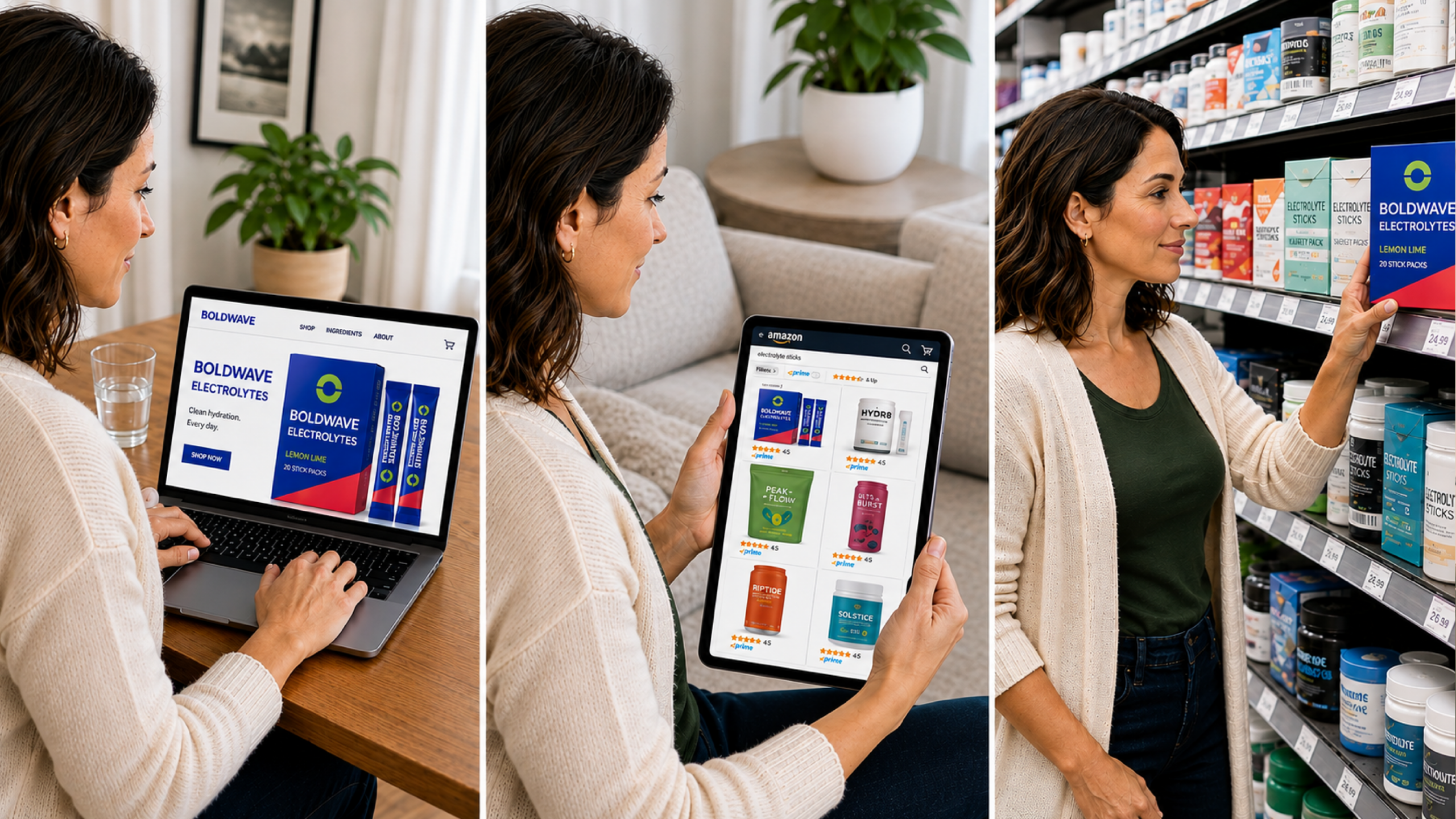
By the time someone clicks “Buy,” they’ve already begun forming expectations about what your supplement will do, how quickly it will work, how it compares to competing products, and what success should look like. Those expectations come from every interaction they have with your brand, including your website, product descriptions, advertising, reviews, social media, pricing, and packaging.
When the experience matches those expectations, customers are more likely to leave satisfied, even if the results are gradual or subtle.
When there’s a gap between what they expected and what they experienced, disappointment often follows. Sometimes that disappointment reflects a genuine product issue. Other times, it reflects something else entirely.
Perhaps the customer expected noticeable results within a few days from a supplement that typically requires consistent use over several weeks. Perhaps they purchased a product that wasn’t the best fit for the outcome they wanted to achieve. Perhaps the marketing created an impression the product was never intended to deliver. Or perhaps the supplement simply affected that individual differently than someone else.
None of those situations automatically mean the product failed.
They illustrate something every supplement brand eventually discovers: customer reviews measure more than formulation quality alone.
“Customer reviews are one of the few places where marketing, product development, and customer experience all intersect. The most valuable reviews aren’t just telling you what customers thought about your product. They’re telling you whether your brand prepared them for the experience they had.” — Tiffany Chang, Director of Systems Operations & Performance, Next Day Nutra
The strongest brands understand this distinction because it changes how they interpret feedback. Instead of treating every negative review as evidence that the product needs to be reformulated, they look deeper. They ask whether customers understood who the product was designed for, how it should be used, what realistic results look like, and whether the overall experience supported those expectations.
That perspective doesn’t excuse negative reviews, nor does it suggest every disappointed customer is simply misunderstanding the product.
It recognizes that customer satisfaction is influenced by the entire journey, not just the ingredients inside the bottle.
Understanding that difference is the first step toward building products that earn stronger reviews, create more satisfied customers, and build lasting trust over time.
Customers Begin Evaluating Your Product Before They Ever Open the Bottle
It’s easy to think the customer experience begins when someone opens your supplement for the first time.
In reality, it begins much earlier.
The moment a potential customer discovers your brand, they’re already collecting information that helps them answer an important question:
“Should I trust this product?”
Very few consumers have the expertise to evaluate ingredient sourcing, manufacturing standards, or formulation quality on their own. Instead, they rely on signals that help them reduce uncertainty before making a purchase.
Those signals appear throughout the buying journey.
A customer may discover your product through a social media post or an online search. They visit your website, compare your product against competitors, read customer reviews, examine the packaging, look at your ingredient panel, evaluate your claims, and decide whether your brand feels credible enough to deserve their money.
Every one of those interactions shapes expectations.
Qualtrics describes brand experience as the cumulative perception customers develop through every interaction they have with a company, from marketing and product design to customer support and post-purchase engagement. That perspective is especially relevant in the supplement industry because customers often begin forming opinions about a product long before they ever open the bottle.
By the time someone takes their first serving, they’ve already developed expectations about questions like:
- How quickly should I notice a difference?
- What kind of results should I expect?
- Is this product worth the price?
- Does this brand seem trustworthy?
- Am I making the right choice?
Those expectations don’t determine whether a supplement will work, but they strongly influence how customers interpret the experience that follows.
Imagine two brands selling similar collagen products.
The first promises younger-looking skin with bold transformation photos and dramatic marketing language. The second emphasizes that collagen supports healthy skin as part of a consistent wellness routine and explains that visible changes, when they occur, often take time and vary from person to person.
Both products may contain similar formulations.
Both may perform similarly.
Yet customers often begin using them with very different expectations.
When expectations are grounded in realistic outcomes, customers are better equipped to evaluate their experience fairly. When expectations become inflated or unclear, even a well-formulated product may struggle to meet the standard customers have created in their minds.
This is why customer reviews rarely tell the entire story by themselves.
They reflect what customers experienced after the purchase through the lens of everything they believed would happen before they ever clicked “Buy.”

Four Reasons Great Supplements Can Still Receive Negative Reviews
Not every negative review points to the same problem.
A two-star review can signal a formulation issue. It can also reveal unclear positioning, unrealistic expectations, inconsistent product use, or simply that the product wasn’t the right fit for that individual customer.
The challenge for founders is knowing the difference.
The brands that improve over time don’t just count positive and negative reviews. They look for the story behind them.
1. The Product Wasn’t the Right Fit
Not every customer who purchases your supplement is the customer you designed it for.
Imagine someone shopping for better sleep. They read that magnesium supports relaxation and purchase your product expecting it to solve years of interrupted sleep.
After several weeks, they leave a disappointing review because they didn’t experience the improvement they hoped for.
That review doesn’t necessarily mean the magnesium was poorly formulated.
Sleep is influenced by countless factors, including stress, caffeine intake, medications, underlying health conditions, and lifestyle habits. A magnesium supplement may support relaxation for some individuals, but it isn’t designed to address every possible cause of poor sleep.
The review may actually reveal that the customer expected the product to solve a problem it was never intended to solve on its own.
The clearer your brand is about who a product is designed for and what role it plays, the more likely customers are to make informed purchasing decisions.
2. Results Didn’t Match the Customer’s Timeline
Some supplements produce noticeable effects quickly.
Others require consistency over time before customers perceive meaningful changes.
Collagen, joint support products, probiotics, and many wellness supplements are often evaluated over weeks rather than days. Yet customers frequently hope to notice dramatic improvements almost immediately.
When those expectations aren’t met, disappointment can appear long before the product has been given a reasonable opportunity to become part of the customer’s routine.
That doesn’t mean brands should promise future results.
It means they should communicate realistic expectations about consistency, intended use, and the role the supplement is designed to play.
Helping customers understand the journey ahead often leads to a more informed evaluation of the product itself.
3. The Product Wasn’t Used as Intended
Supplements are only one part of a customer’s overall wellness routine.
Serving sizes are skipped.
Products are taken inconsistently.
Directions are misunderstood.
Sometimes customers combine products in ways the brand never anticipated.
None of this means the customer is at fault. Life gets busy, routines change, and people naturally use products differently.
But it does mean founders should be cautious about interpreting every disappointing review as evidence that the formulation needs to change.
Sometimes the better question is whether customers had the information they needed to use the product confidently and consistently.
Simple improvements such as clearer instructions, onboarding emails, FAQs, or product inserts can often reduce confusion before it becomes frustration.
4. Individual Experiences Naturally Vary
Perhaps the hardest reality for founders to accept is that no supplement works exactly the same way for everyone.
People have different diets, lifestyles, genetics, health conditions, medications, stress levels, and wellness goals. Those variables influence how individuals experience any supplement.
Responsible brands recognize this reality.
Rather than promising identical outcomes, they communicate what the product is intended to support while acknowledging that individual experiences will differ.
Ironically, this kind of transparency often builds more trust than exaggerated promises ever could.
Customers don’t expect perfection.
They expect honesty.
When brands communicate with that mindset, reviews become more balanced, expectations become more realistic, and customer trust has room to grow.
Great Brands Reduce Uncertainty Instead of Making Bigger Promises
One of the biggest differences between growing supplement brands and struggling ones isn’t the quality of their formulations.
It’s how effectively they help customers make informed decisions.
When founders encounter disappointing reviews, the instinct is often to focus on the product itself. They consider reformulating ingredients, adjusting dosages, or launching an entirely new product.
Sometimes those changes are necessary.
Just as often, the greater opportunity lies in reducing uncertainty before and after the purchase.
The strongest brands recognize that every unanswered question before a customer clicks “Buy” introduces uncertainty.
- Is this the right product for me?
- How should I take it?
- When might I notice a difference?
- What should I realistically expect?
- How does this fit into my overall wellness routine?
When customers struggle to answer those questions on their own, they fill in the gaps with assumptions. Those assumptions don’t always reflect what the product was actually designed to do.
That’s why customer education isn’t simply a marketing exercise. It’s part of the product experience itself.
Some of the most effective brands reduce uncertainty through relatively simple improvements.
Their product pages explain who the supplement is designed for and who it may not be appropriate for. Frequently asked questions address common concerns before they become customer support inquiries. Welcome emails reinforce how to use the product consistently and set realistic expectations for the customer journey. Product inserts provide clear instructions instead of assuming customers will remember everything they read online.
None of these improvements change the formula inside the bottle.
They change how confidently customers experience it.
Imagine two brands launching the same probiotic.
One product page focuses almost entirely on ingredient names and marketing claims.
The other explains who the product is intended for, how to incorporate it into a daily routine, why consistency matters, and answers the questions most first-time buyers are likely to have.
Both products may deliver comparable quality.
But one brand has done significantly more to help customers feel informed before they begin.
That confidence influences everything that follows, from how customers use the product to how they interpret the results they experience.
The goal isn’t to eliminate every negative review. That’s neither realistic nor possible.
The goal is to help the right customers choose the right product with a clear understanding of what it is designed to support.
When brands reduce uncertainty, they make it easier for customers to evaluate the product on its intended purpose rather than on assumptions or unrealistic expectations.
Over time, that doesn’t just improve customer satisfaction.
It builds trust.
And trust is one of the few competitive advantages that becomes more valuable with every positive customer experience.
The Best Reviews Begin Long Before They’re Written
Founders often think of customer reviews as a report card on their product.
In reality, they’re often a reflection of something much broader.
A review captures the customer’s entire experience with your brand. It reflects the expectations they formed before purchasing, how confidently they understood the product, how well it fit their needs, how they incorporated it into their routine, and ultimately whether the experience aligned with what they believed would happen.
That’s why two brands with similarly formulated products can earn dramatically different customer feedback.
One leaves customers to figure everything out on their own.
The other helps customers make informed decisions from the very beginning.
Neither brand can guarantee results.
Neither brand can control every customer’s experience.
But one has invested more heavily in reducing uncertainty, communicating clearly, and building trust at every stage of the customer journey.
Over time, those small decisions compound.
Customers feel more confident choosing the product.
They know what the supplement is designed to support.
They understand how to use it consistently.
And when they leave a review, they’re evaluating the product through the lens of realistic expectations rather than assumptions.
The strongest supplement brands recognize that positive reviews are shaped by far more than formulation quality.
They are shaped by clarity, education, realistic expectations, product fit, and the confidence customers feel throughout the buying experience.
Long before a customer shares their opinion with the world, they have already decided whether your brand helped them feel informed, supported, and confident in their purchase.
The brands that consistently earn trust understand that the customer journey begins well before the first serving and continues through every interaction that follows.
Build a Customer Experience That Supports Your Product
Building a successful supplement brand requires more than developing an effective formula. Every interaction a customer has with your brand influences how they experience your product, from the first impression on your website to the expectations they bring when they open the bottle.
At Next Day Nutra, we help brands build that foundation from the start. From formulation and packaging to manufacturing and launch strategy, every decision should work together to create a product customers understand, trust, and feel confident choosing.
Whether you’re launching your first supplement or expanding an established product line, building the right customer experience begins long before the first review is ever written.
If you’re ready to build a supplement brand positioned for long-term growth, schedule a complimentary consultation with the Next Day Nutra team today:
Industries
Recent Posts